Art Experiences
Course Description:
Art Experiences is a hands-on, inclusive visual arts course designed to give students with special needs the opportunity to explore a wide range of art forms. Through adaptive learning strategies and individualized support, students engage in drawing, painting, sculpture, digital media, and other creative activities, building confidence, self-expression, and fine motor skills in a supportive environment.
Course Goals:
* Provide students with meaningful, accessible experiences in multiple artistic media.
* Foster creativity, self-expression, and problem-solving through art.
* Support individualized learning needs through adaptive strategies and scaffolding.
* Encourage collaboration, peer feedback, and social interaction within the art studio.
* Develop a sense of accomplishment and pride through completed art projects and portfolio work.
Instructional Approach:
* Multi-modal teaching strategies that address diverse learning styles.
* Hands-on art projects tailored for different skill levels and abilities.
* Use of visual supports, assistive technology, and differentiated materials.
* Student helpers and peer mentoring to provide additional guidance and encouragement.
* Frequent reflection, feedback, and opportunities for self-expression.
Sample Art Experiences:
* Drawing and painting with various mediums (pencils, pastels, acrylics, watercolor).
* Sculpture, clay modeling, and mixed-media projects.
* Digital art and design using accessible software and tools.
* Collaborative murals and group art projects.
* Portfolio development and art showcases to celebrate student achievements.
Outcome:
By the end of the course, students will have developed technical skills, creative confidence, and a deeper appreciation for the arts. They will have completed a portfolio of diverse works reflecting their personal growth and artistic exploration.
Art Experiences Projects
Elements of Art & Principles of Design
Foundational Concepts
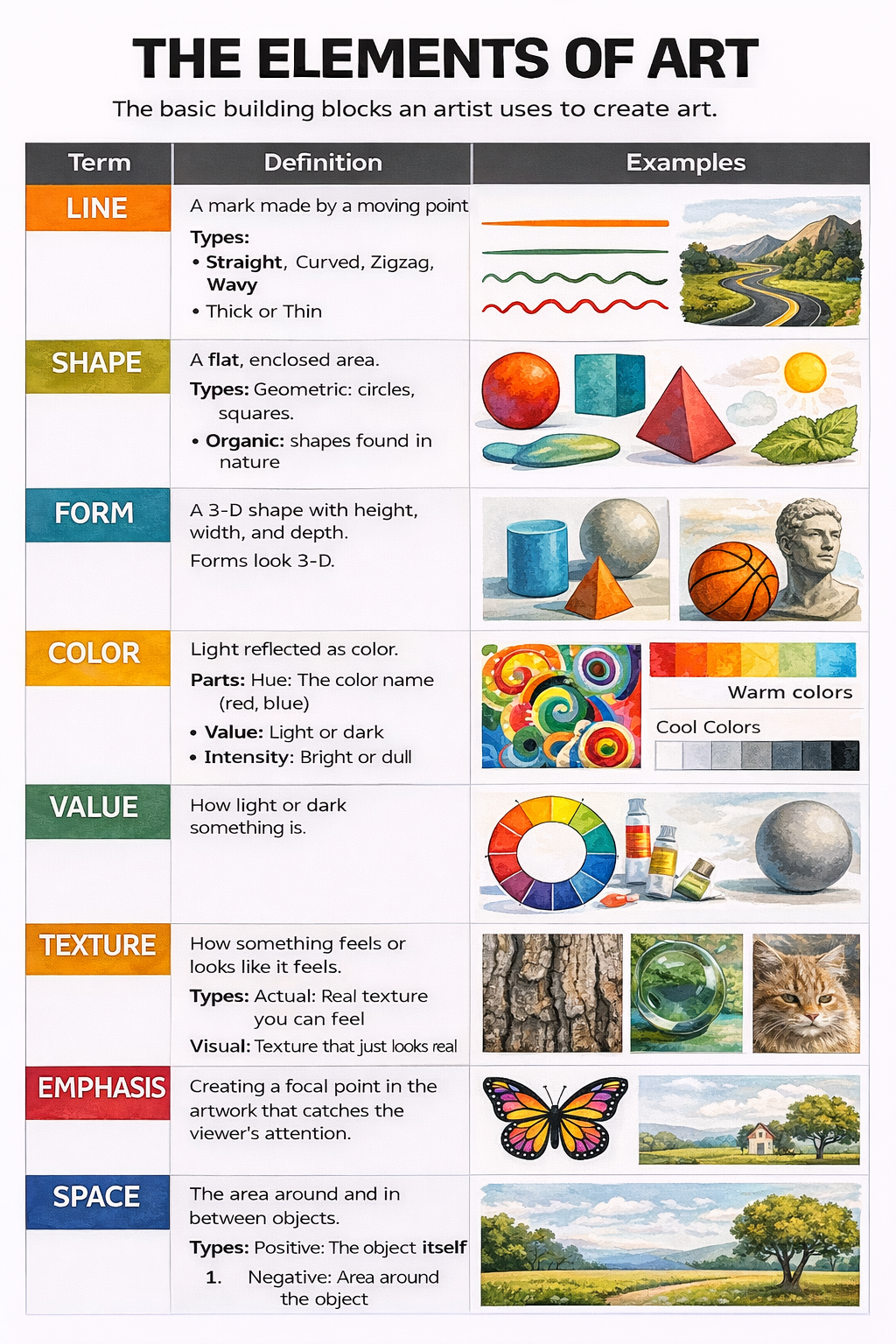
The elements of art are the basic building blocks artists use to create artwork: line, shape, form, color, value, texture, and space. The principles of design are the ways those elements are arranged to make art effective and visually interesting, including balance, contrast, emphasis, movement, pattern, rhythm, unity, and proportion. Together, the elements are the tools, and the principles are the guidelines for using those tools to organize a composition.
Elements of Art
Principles of Design
“Creativity takes courage.”

Cloverleaf High School
Follow Us