Dramatic Lighting
Project Overview
In this AP-level oil pastel, acrylic painting, marker, or ink assignment, students will create a highly resolved artwork that explores dramatic lighting and intentional color limitation as primary tools for visual impact and conceptual depth. Students will choose to work in black and white (value-driven composition), a warm color scheme, or a cool color scheme to heighten mood, tension, and atmosphere.
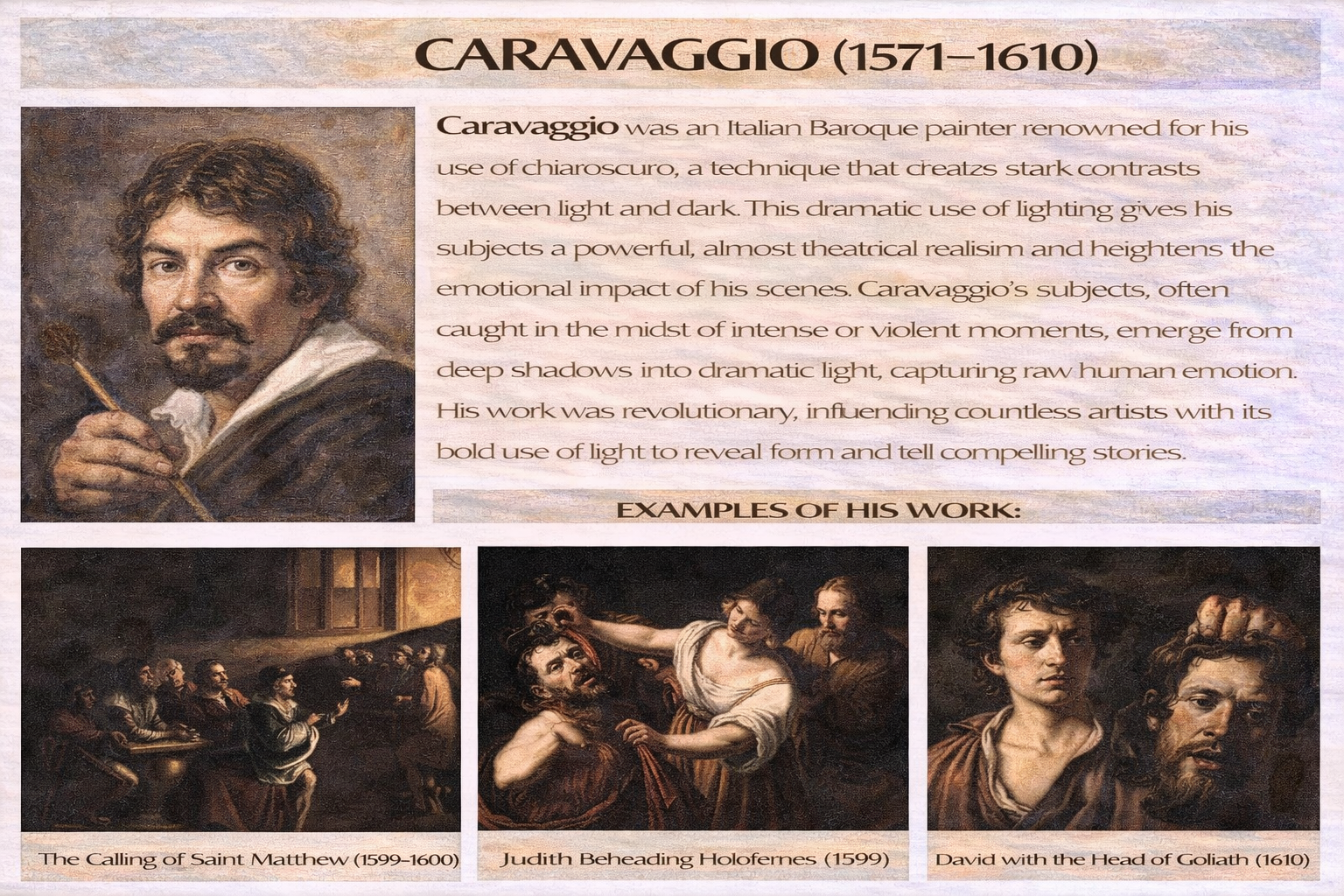
Rather than relying on detailed subject matter alone, students will investigate how light defines form, directs the viewer’s eye, and creates psychological intensity. Inspired by the chiaroscuro of Caravaggio, the moody tonal contrasts of film noir, and contemporary cinematic lighting, students will examine how strong highlights, deep shadows, and controlled color palettes can transform an ordinary subject into a visually commanding composition.
Students are expected to demonstrate advanced observational skills, a full understanding of value relationships, and sophisticated handling of their chosen medium. Conceptual intention and visual clarity should align with AP Studio Art standards.
AP Studio Focus
This assignment supports:
* Sustained Investigation: Exploring light, atmosphere, emotional tone, or visual drama through controlled color and value strategies.
* Material Practice: Demonstrating advanced handling of oil pastel, acrylic paint, marker, or ink.
* Visual Evidence of Inquiry: Showing intentional decision-making in lighting direction, contrast, and palette restriction.
Objective
Students will:
* Create a composition featuring a dominant, dramatic light source.
* Work intentionally in either black and white, warm colors, or cool colors.
* Demonstrate a full and controlled range of value to create depth and dimensionality.
* Use contrast, edge control, and shadow to create mood and focus.
* Manipulate color temperature and lighting direction to enhance emotional impact.
* Produce a finished piece that reflects AP-level craftsmanship, conceptual intention, and risk-taking.
Materials
* Oil pastels
* Acrylic paint
* Markers and/or ink
* Canvas, panel, or heavyweight paper
* Pencil for preliminary drawing
* Brushes, blending tools, or mark-making tools appropriate to medium
* Student-generated photographic reference (required)
Process
1. Investigation & Concept Development:
Develop a concept that benefits from dramatic lighting (mystery, isolation, tension, serenity, confrontation, transformation, etc.). Determine whether black and white, warm, or cool color relationships best support your idea. Submit 3–4 thumbnail sketches exploring light placement and cropping.
2. Reference Photography:
Take multiple photographs with a single, strong directional light source. Experiment with side lighting, backlighting, or spotlight effects to create deep shadows and high contrast.
3. Value & Lighting Study:
Create a small value study to map highlights, midtones, and shadows. If working in color, determine how your limited palette will maintain value contrast.
4. Color Strategy & Understructure:
Establish large value shapes first. In acrylic, consider underpainting to map contrast. In oil pastel, layer strategically to build richness. In marker/ink, use line weight and density to create tonal variation.
5. Refinement & Resolution:
Strengthen focal points through contrast and selective detail. Push darks deeper and highlights brighter where necessary. Ensure the final piece feels cohesive, intentional, and visually dramatic.
Assessment Criteria
* Strong and convincing use of dramatic lighting
* Full and intentional range of value
* Effective use of black and white, warm, or cool color scheme
* Sophisticated handling of chosen medium
* Clear focal point and compositional control
* Conceptual depth and visual intensity
* Professional-level craftsmanship and presentation
Essential Question
How can dramatic lighting and controlled color palettes transform an ordinary subject into a powerful visual and emotional experience?
Learning Objectives / Student Targets
By the end of this project, students will be able to:
Dramatic Lighting & Value Control
* Demonstrate understanding of chiaroscuro through strong contrast between light and shadow.
* Use a full range of value to create depth, dimension, and focal emphasis.
* Establish and maintain a consistent, believable light source within a composition.
Intentional Color Strategy
* Work effectively within a restricted palette (black and white, warm colors, or cool colors).
* Manipulate color temperature to influence mood and spatial depth.
* Maintain value contrast even within limited color schemes.
Composition & Visual Impact
* Organize visual elements to create a clear focal point and dramatic emphasis.
* Use cropping, negative space, and directional light to guide the viewer’s eye.
* Create visual tension and atmosphere through contrast and placement.
Technical Skill & Material Handling
* Demonstrate advanced control of oil pastel, acrylic paint, marker, or ink.
* Apply layering, blending, and mark-making techniques appropriate to the chosen medium.
* Show craftsmanship through clean edges, intentional texture, and resolved surfaces.
Conceptual Development & Inquiry
* Develop a concept that is strengthened by dramatic lighting and palette restriction.
* Make intentional artistic decisions that align lighting, color, and composition with meaning.
* Take creative risks that demonstrate AP-level thinking and experimentation.
Reflection & Artistic Growth
* Analyze how lighting and color choices impact emotional tone and viewer perception.
* Participate in critique using discipline-specific vocabulary related to value, contrast, and temperature.
* Demonstrate growth in visual sophistication, risk-taking, and technical execution consistent with AP Studio Art expectations.
Ohio Fine Arts Standards (Visual Arts)
Creating
CE.1HSIII – Generate and conceptualize artistic ideas and work.
* Students develop an original concept that relies on dramatic lighting and restricted color palettes to communicate mood and meaning.
CE.2HSIII – Organize and develop artistic ideas and work.
* Students apply advanced understanding of value, contrast, color temperature, and composition to create a visually cohesive and emotionally impactful artwork.
CE.3HSIII – Refine and complete artistic work.
* Students revise and refine their work through critique and self-evaluation, demonstrating craftsmanship and technical control in oil pastel, acrylic, marker, or ink.
Presenting / Producing
PR.4HSIII – Select, analyze, and interpret artistic work for presentation.
* Students evaluate how lighting direction, value contrast, and palette restriction influence viewer interpretation prior to final presentation.
PR.5HSIII – Develop and refine artistic techniques and work for presentation.
* Students demonstrate advanced material handling, surface resolution, and professional presentation standards appropriate for AP Studio Art.
PR.6HSIII – Convey meaning through the presentation of artistic work.
* Students present a finished piece in which lighting and color strategy clearly communicate conceptual intent.
Responding
RE.7HSIII – Perceive and analyze artistic work.
* Students analyze historical and contemporary examples of dramatic lighting (e.g., chiaroscuro, film noir, contemporary photography) to inform their artistic decisions.
RE.8HSIII – Interpret intent and meaning in artistic work.
* Students explain how value relationships, shadow placement, and color temperature influence mood and narrative tension.
RE.9HSIII – Apply criteria to evaluate artistic work.
* Students use established criteria (value range, lighting consistency, palette control, craftsmanship, conceptual clarity) to evaluate their own and peers’ artwork.
Connecting
CO.10HSIII – Synthesize and relate knowledge and personal experiences to make art.
* Students connect personal themes or emotional ideas to their use of lighting and color limitation.
CO.11HSIII – Relate artistic ideas and works with societal, cultural, and historical context.
* Students examine how dramatic lighting has been used historically (Baroque painting, cinema, photography) and apply those strategies in a contemporary context.
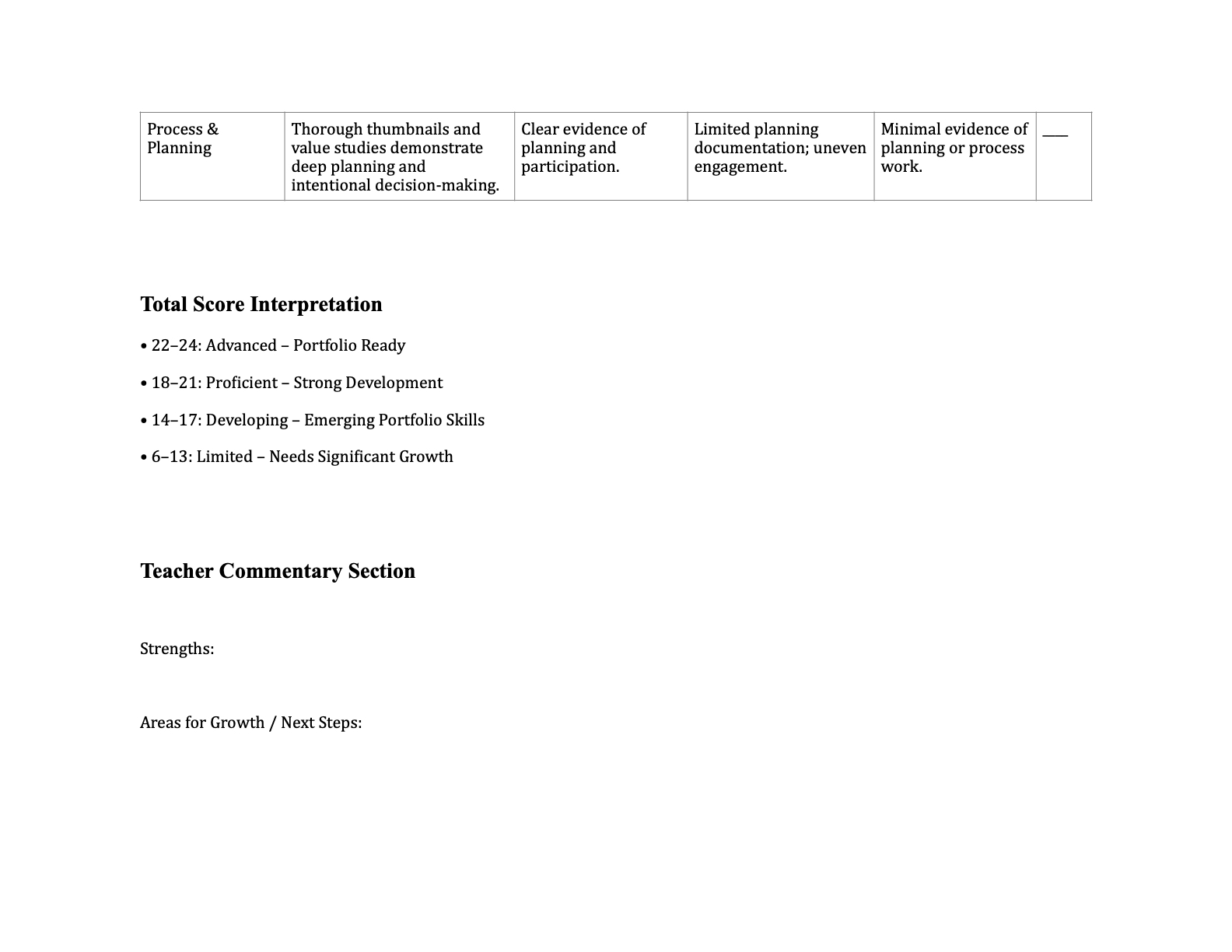
Grading Rubric
Rubrics have become popular with teachers as a means of communicating expectations for an assignment, providing focused feedback on works in progress, and grading final products. A rubric is a document that articulates the expectations for an assignment by listing the criteria, or what counts, and describing levels of quality from excellent to poor.

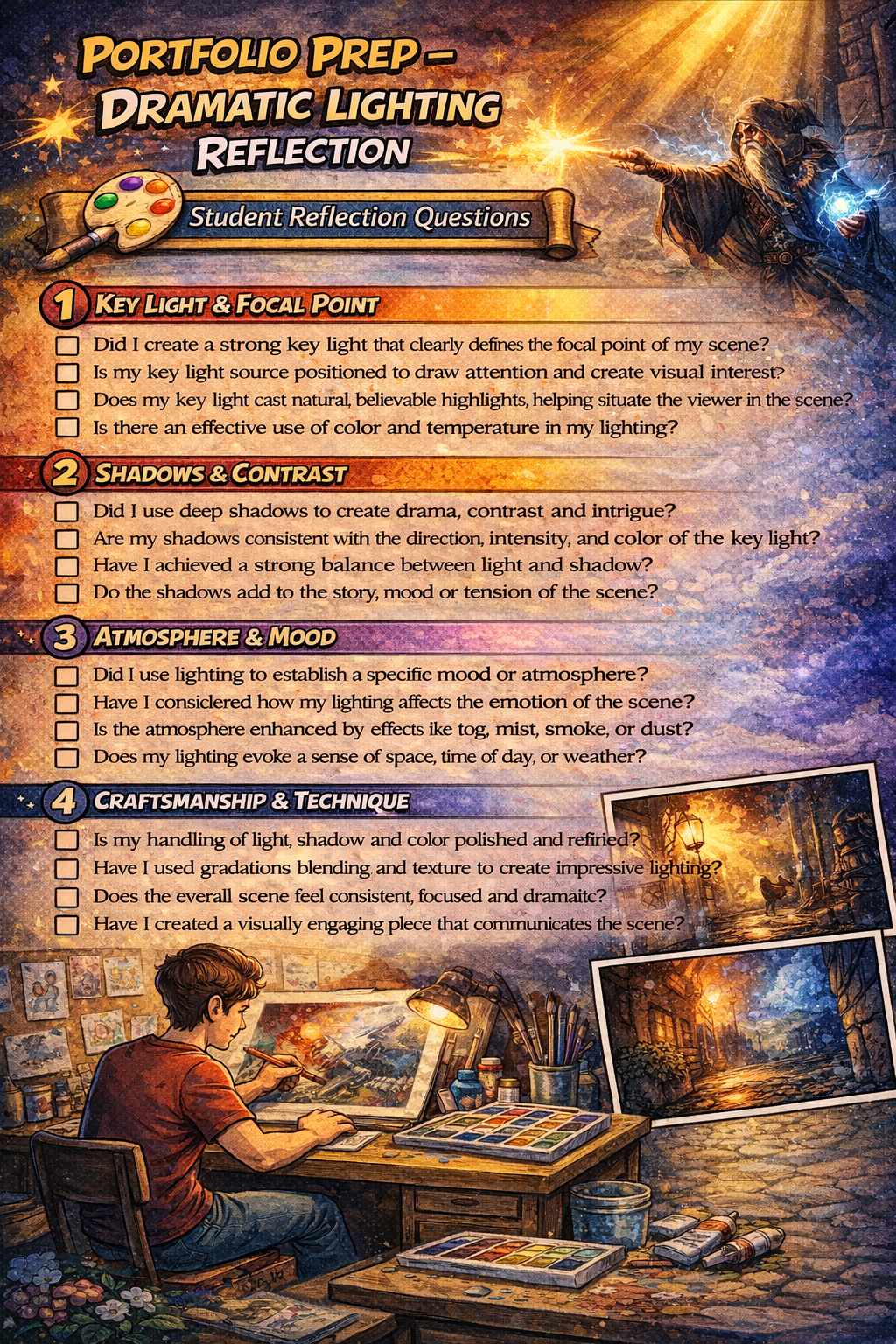
Student Reflection
A student reflection is a brief, thoughtful explanation of how and why a student created their artwork, including the choices they made, challenges they faced, and what they learned during the process. In art, reflection is important because it helps students develop critical thinking, recognize growth, strengthen their creative decision-making, and take ownership of their artistic development.
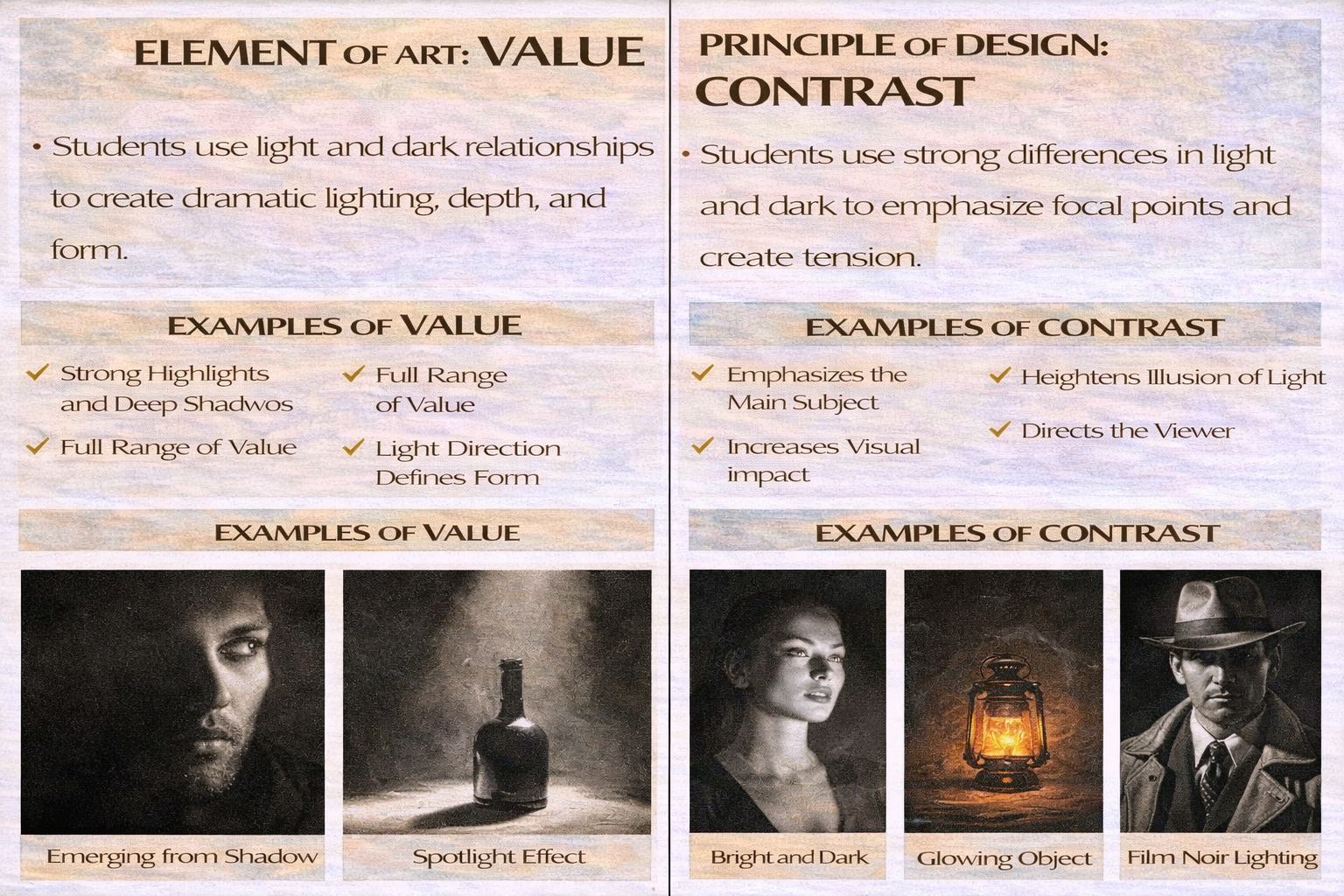
Element of Art & Principle of Design
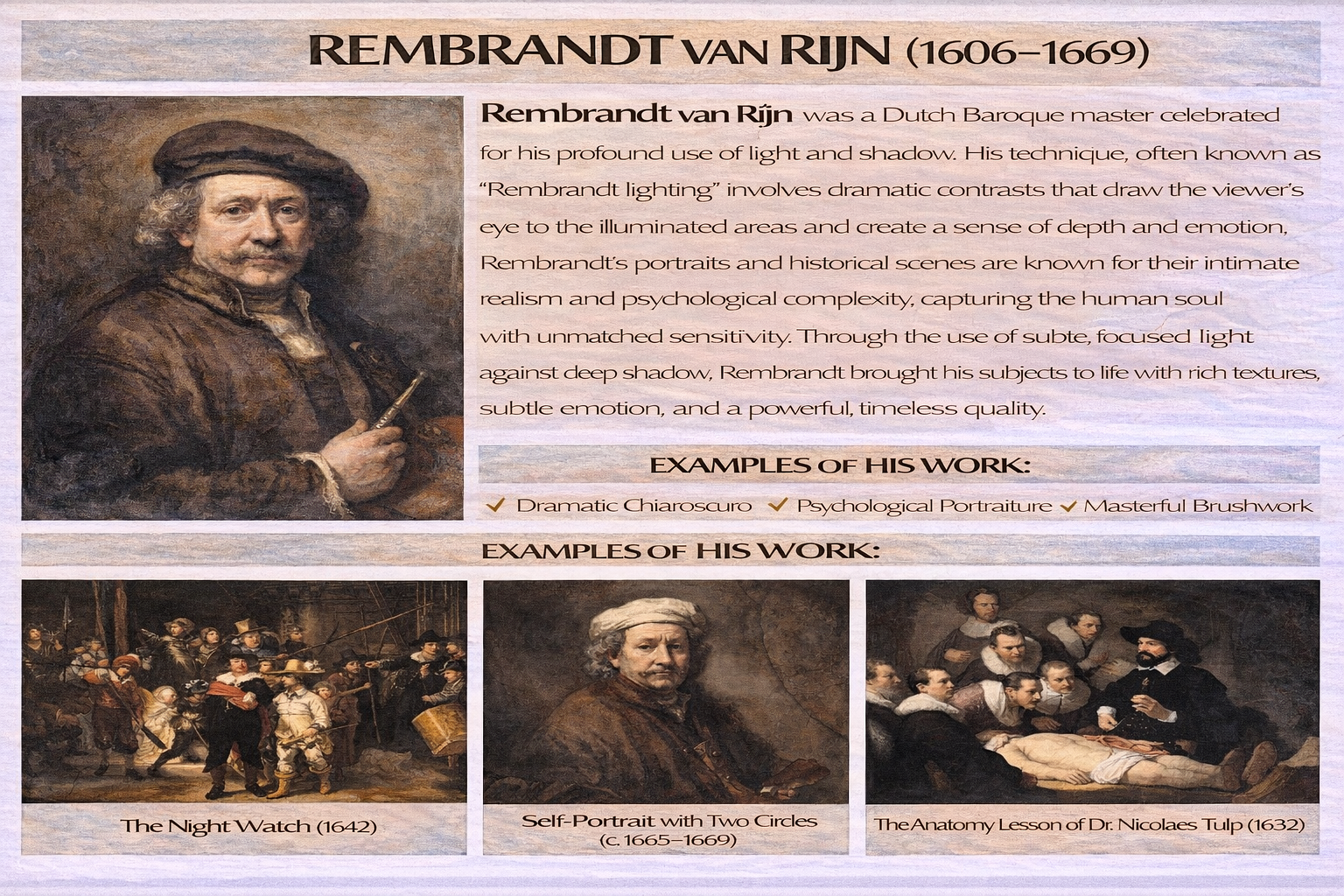
Dramatic Lighting Artists
Techniques
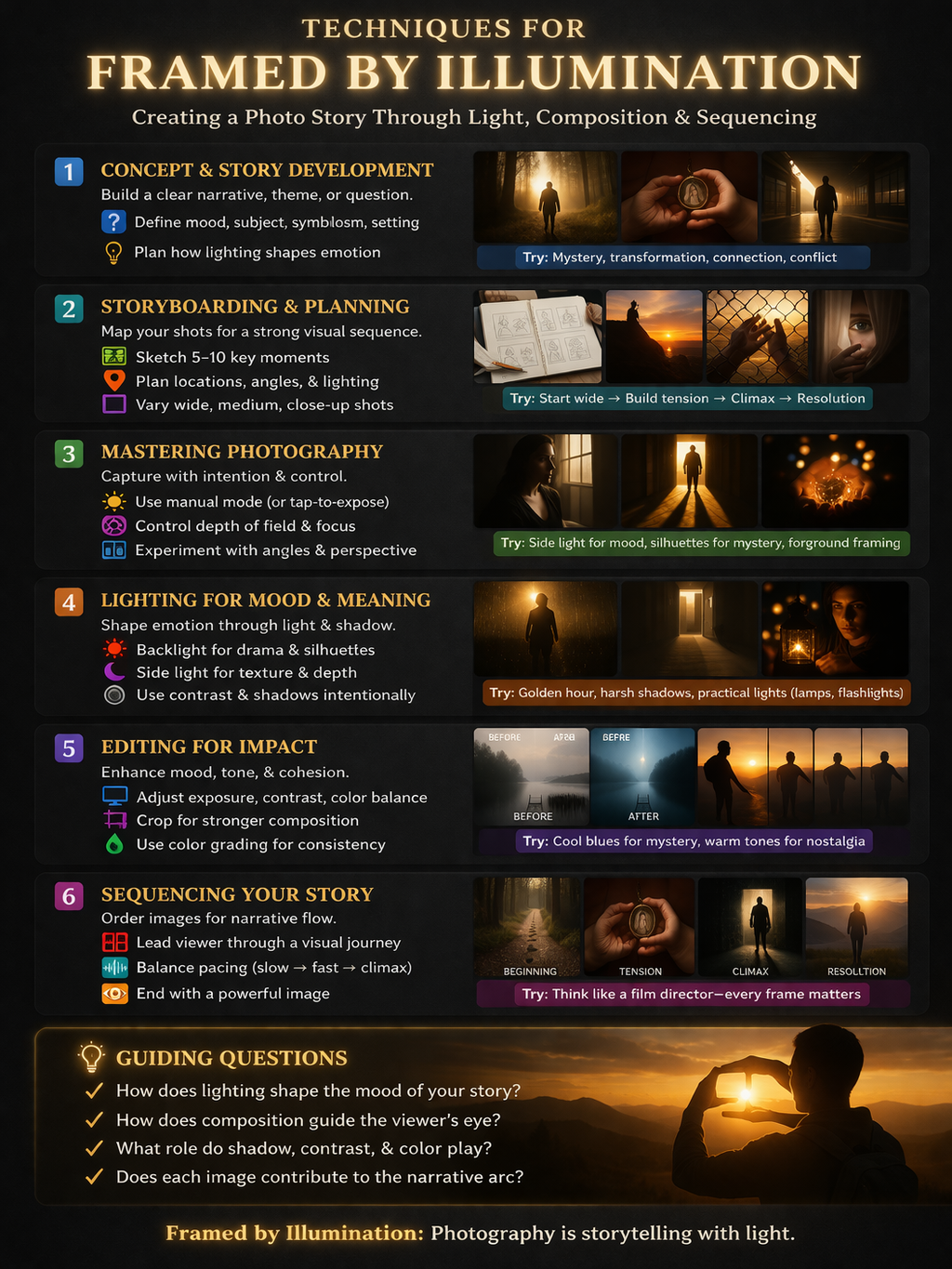
Demonstrations

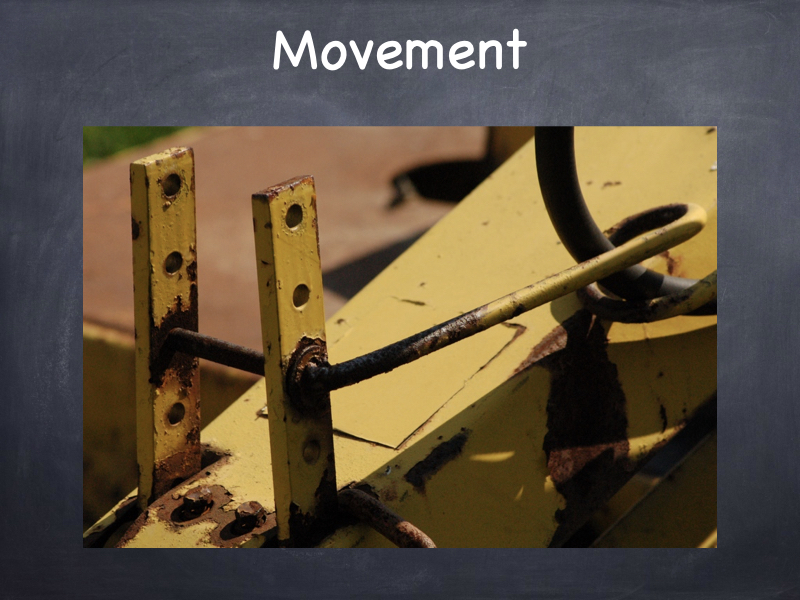

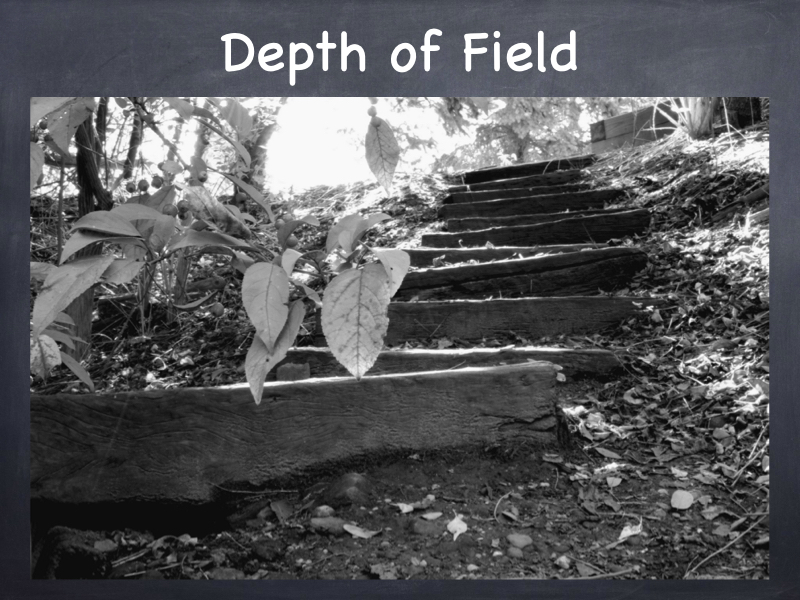


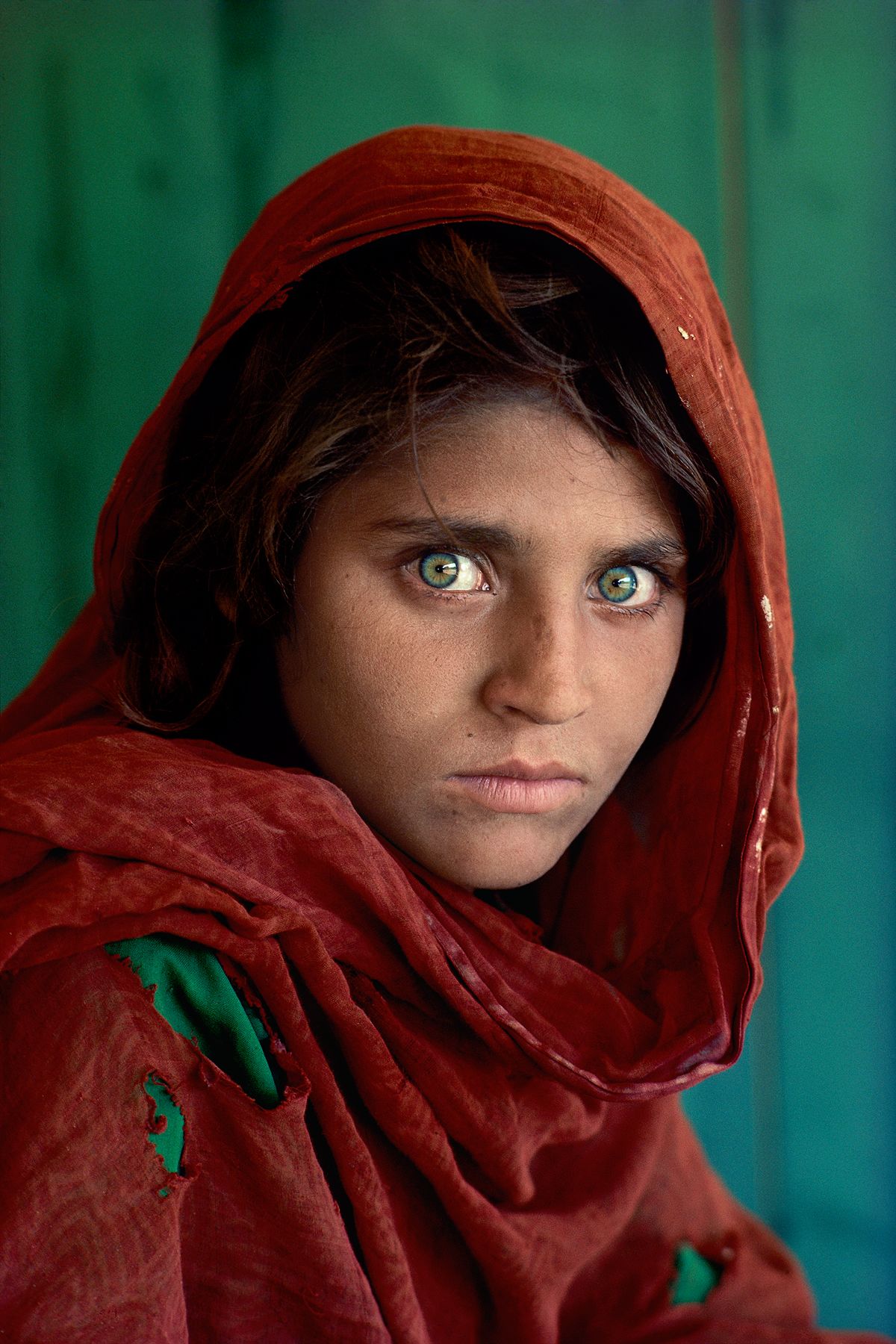
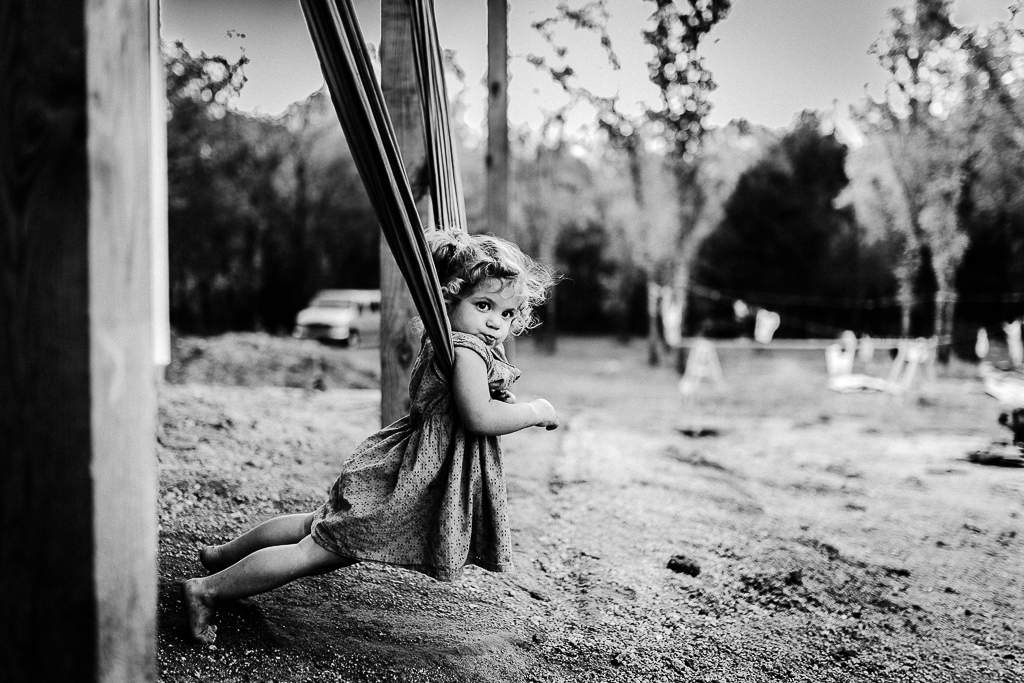
Examples



“Creativity takes courage.”

Cloverleaf High School
Follow Us