Hero or Villian?
Overview
In this AP-level assignment, students will create an original comic book cover or narrative illustration in which they represent themselves as either a hero or a villain. Students will explore identity, symbolism, and alter-ego storytelling while designing a visually dynamic composition that communicates character, power, and narrative. Each student will determine their character’s superpower, origin story, strengths, weaknesses, and visual aesthetic, using these elements to reveal deeper aspects of personal identity.
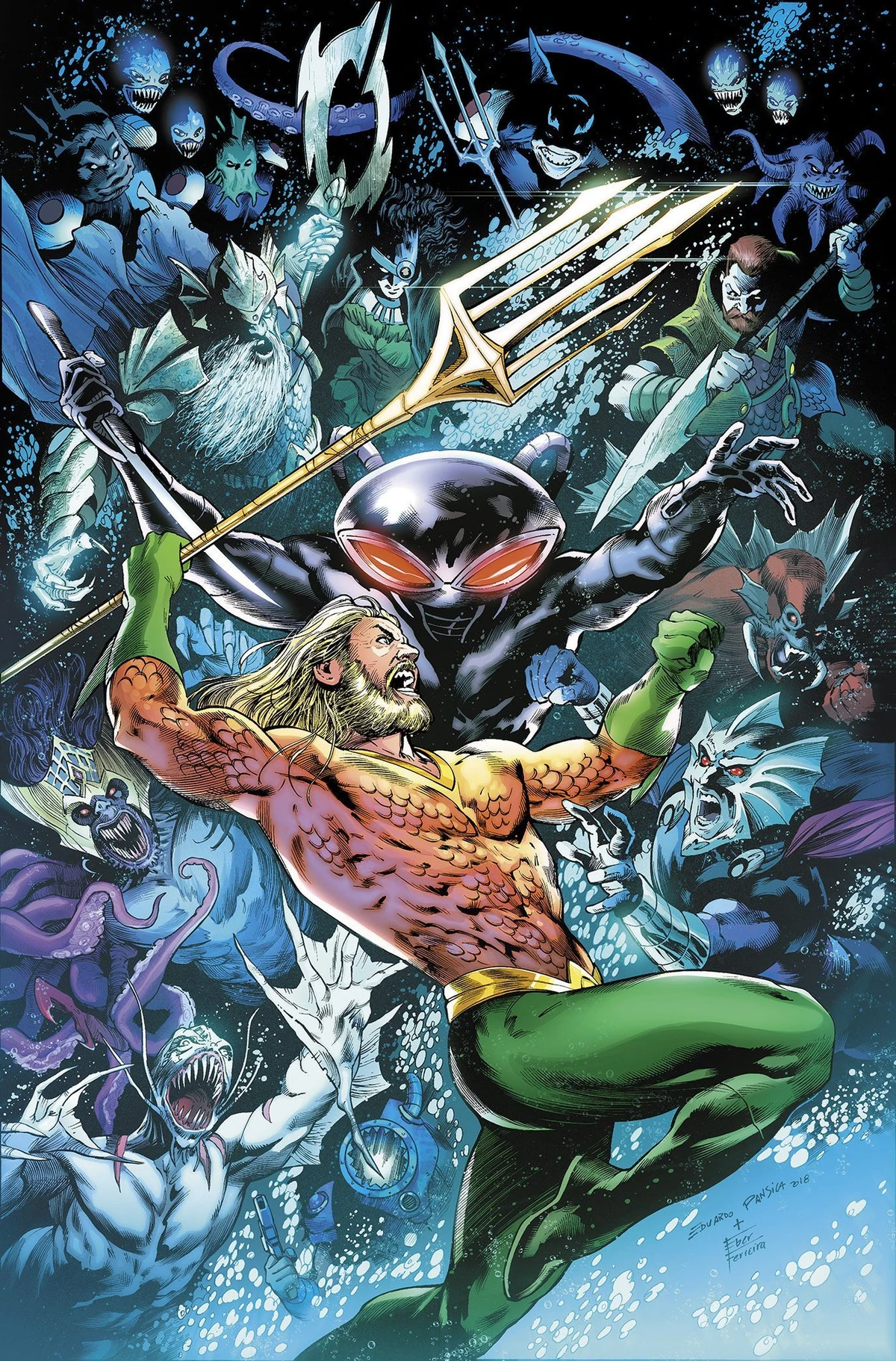
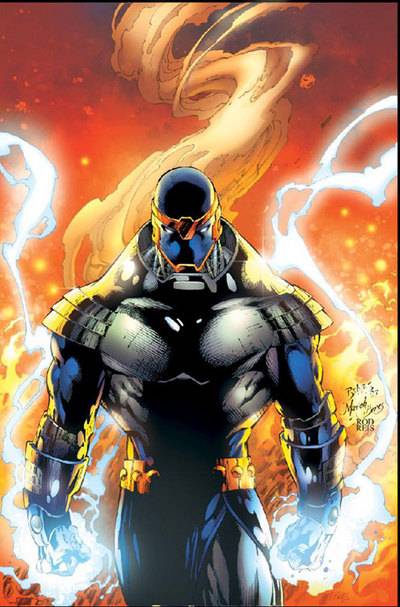
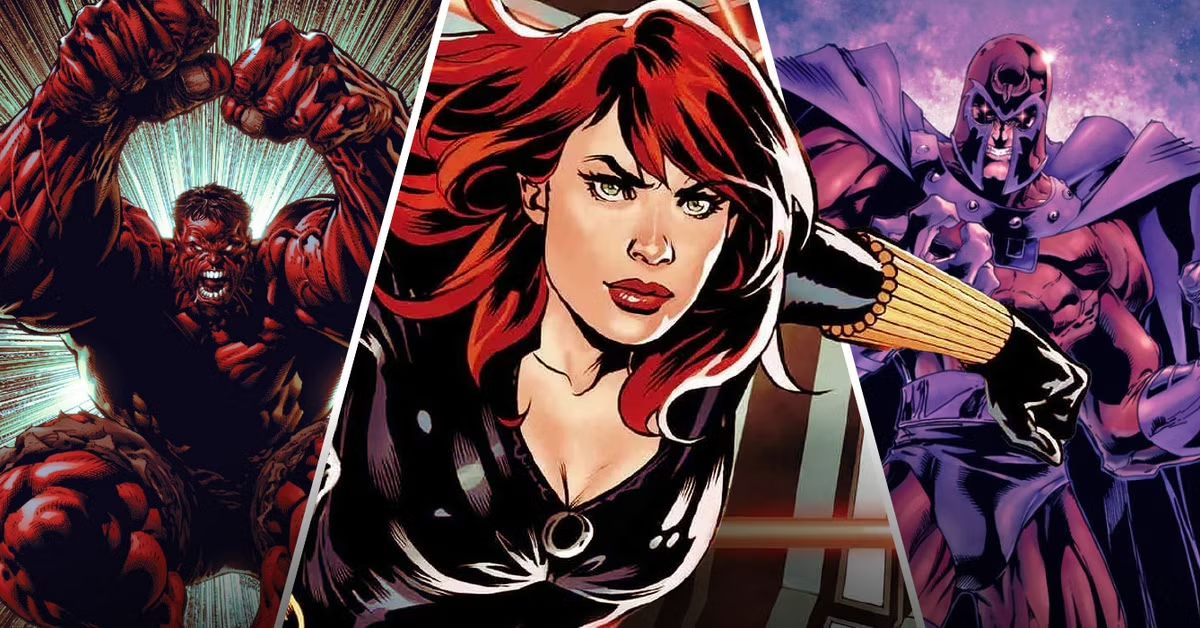
Inspired by comic artists such as Jack Kirby, known for dramatic action and dynamic composition, and Frank Miller, recognized for high-contrast ink work and bold storytelling, students will explore how line, color, and composition can work together to create energy, mood, and psychological depth.
This project emphasizes expressive mark-making, bold composition, strong value contrast, and intentional color choices while encouraging students to make conceptual decisions about character alignment (hero or villain), symbolic costume design, and narrative setting.
AP Studio Focus
This assignment supports:
* Sustained Investigation: Identity, alter-ego, duality, morality, power, symbolism, or personal narrative.
* Material Practice: Advanced use of ink line work, marker blending, and colored pencil layering.
* Intentional Composition: Dynamic poses, perspective, focal point, and visual storytelling techniques.
Objective
Students will:
* Design and illustrate a self-inspired hero or villain character.
* Develop a clear superpower and visual representation of that power.
* Demonstrate strong use of line variation, contrast, and color harmony.
* Create depth and movement through perspective and dynamic composition.
* Incorporate typography (title/logo) that reflects character identity.
* Communicate conceptual depth through symbolism and narrative elements.
Materials
* Alcohol or water-based markers (full color range)
* Colored pencils (for blending, shading, and refinement)
* Black ink pens or brush pens (varied line weights)
* Bristol board or heavy drawing paper
* Pencil and eraser for initial sketch
* Ruler (optional for layout or typography guidelines)
Process
1. Concept Development:
Brainstorm personal traits, strengths, fears, or values. Decide whether you will portray yourself as a hero or villain. Develop a superpower and origin story that symbolically connects to your identity.
2. Character Design:
Sketch costume ideas, facial expressions, poses, and power effects. Consider symbolism in colors, shapes, and accessories.
3. Composition Planning:
Plan a dynamic layout (comic cover or action scene). Establish focal point, perspective, and movement. Incorporate background elements that enhance narrative.
4. Inking:
Finalize line work using varied line weight to create depth and emphasis. Outline major forms and details clearly.
5. Color Application:
Use markers to establish bold color blocks and atmosphere. Layer colored pencils to deepen shadows, enhance highlights, and create texture. Focus on contrast and dramatic lighting.
6. Refinement:
Add final details, adjust values, refine edges, and ensure strong visual impact. Include a title/logo that reinforces character identity.
Assessment Criteria
* Strong conceptual connection between identity and character design
* Effective use of line variation and ink technique
* Bold and harmonious color application
* Dynamic composition and sense of movement
* Clear focal point and visual storytelling
* Professional craftsmanship and presentation
Essential Question
How can transforming yourself into a hero or villain reveal deeper truths about identity, power, and personal narrative through visual storytelling?
Learning Objectives / Student Targets
By the end of this project, students will be able to:
Concept Development & Identity Exploration
* Develop an original hero or villain character rooted in personal identity.
* Create a superpower and origin story that symbolically connects to personal traits, values, or experiences.
* Translate abstract ideas (strength, fear, ambition, duality, etc.) into visual form.
Character Design & Representation
* Design a visually cohesive character including costume, pose, expression, and symbolic elements.
* Demonstrate understanding of proportion, anatomy, and dynamic figure positioning.
* Create convincing action, movement, or dramatic stance appropriate to comic storytelling.
Material & Technical Skill
* Use ink with varied line weight to create depth, emphasis, and strong contour definition.
* Apply markers to establish bold color blocking and atmospheric effects.
* Layer colored pencil to enhance shading, texture, highlights, and smooth tonal transitions.
* Demonstrate control of contrast to create dramatic lighting and focal impact.
Integration of Media
* Thoughtfully combine ink, marker, and colored pencil into a unified visual composition.
* Make intentional decisions about how each medium enhances mood, structure, or emphasis.
* Maintain craftsmanship and clean presentation while working with multiple materials.
Composition & Visual Storytelling
* Organize visual elements to create a dynamic and balanced comic-style layout.
* Establish a clear focal point and guide the viewer’s eye through contrast, color, and movement.
* Incorporate background elements and typography that support narrative meaning.
Creative & Critical Thinking
* Experiment with expressive mark-making and bold color choices to enhance character identity.
* Problem-solve technical and compositional challenges during the creative process.
* Communicate narrative and symbolic meaning through visual decisions.
Reflection & Artistic Growth
* Analyze personal strengths and areas for growth in character design and media use.
* Articulate artistic intent and conceptual choices during critique or written reflection.
* Demonstrate increased confidence in combining concept, storytelling, and technical skill in an AP-level artwork.
Ohio Fine Arts Standards (Visual Arts)
Creating (Cr)
VA:Cr1.1 – Generate and conceptualize artistic ideas and work.
Students develop an original hero or villain concept rooted in personal identity, symbolism, and narrative.
VA:Cr2.1 – Organize and develop artistic ideas and work.
Students plan dynamic compositions, design characters, and select appropriate media (ink, marker, colored pencil) to support their concept.
VA:Cr2.2 – Demonstrate safe and proficient use of materials, tools, and equipment.
Students demonstrate technical control of ink line work, marker blending, and colored pencil layering.
VA:Cr3.1 – Refine and complete artistic work.
Students revise compositions, refine details, strengthen contrast, and finalize presentation for AP-level portfolio quality.
Presenting (Pr)
VA:Pr4.1 – Select, analyze, and interpret artistic work for presentation.
Students evaluate how their character design and narrative effectively communicate identity and meaning.
VA:Pr5.1 – Develop and refine artistic techniques and work for presentation.
Students prepare work with professional craftsmanship and intentional visual impact.
Responding (Re)
VA:Re7.1 – Perceive and analyze artistic work.
Students analyze comic art influences (e.g., line variation, dramatic lighting, composition) and apply similar strategies.
VA:Re8.1 – Interpret intent and meaning in artistic work.
Students explain how symbolism, color choices, and composition communicate their character’s identity.
VA:Re9.1 – Apply criteria to evaluate artistic work.
Students engage in critique, assessing conceptual strength, technical execution, and narrative clarity.
Connecting (Cn)
VA:Cn10.1 – Synthesize and relate knowledge and personal experiences to make art.
Students connect personal identity, experiences, and values to the creation of a hero or villain persona.
VA:Cn11.1 – Relate artistic ideas and works with societal, cultural, and historical context.
Students explore themes of power, morality, duality, and symbolism within the context of comic book storytelling and contemporary culture.
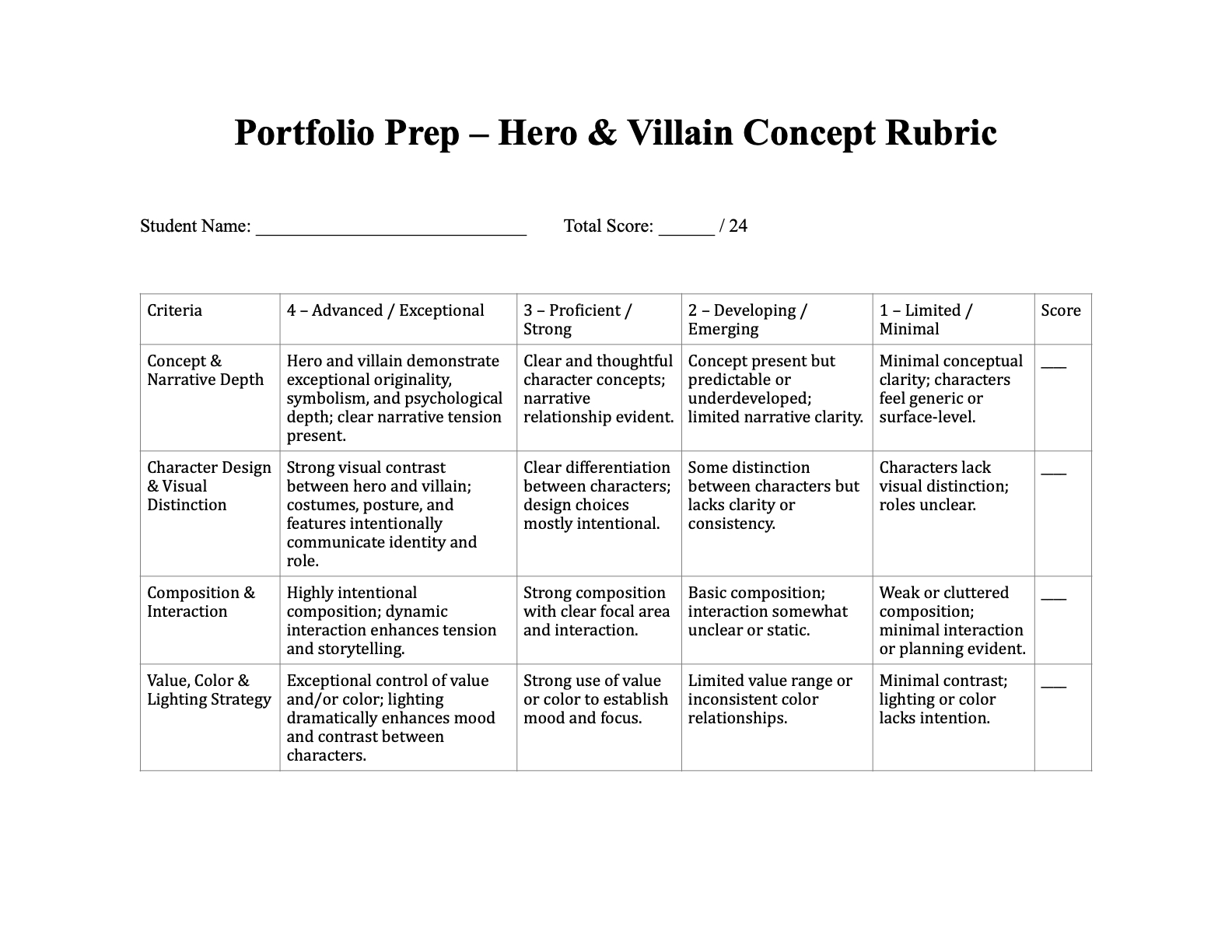
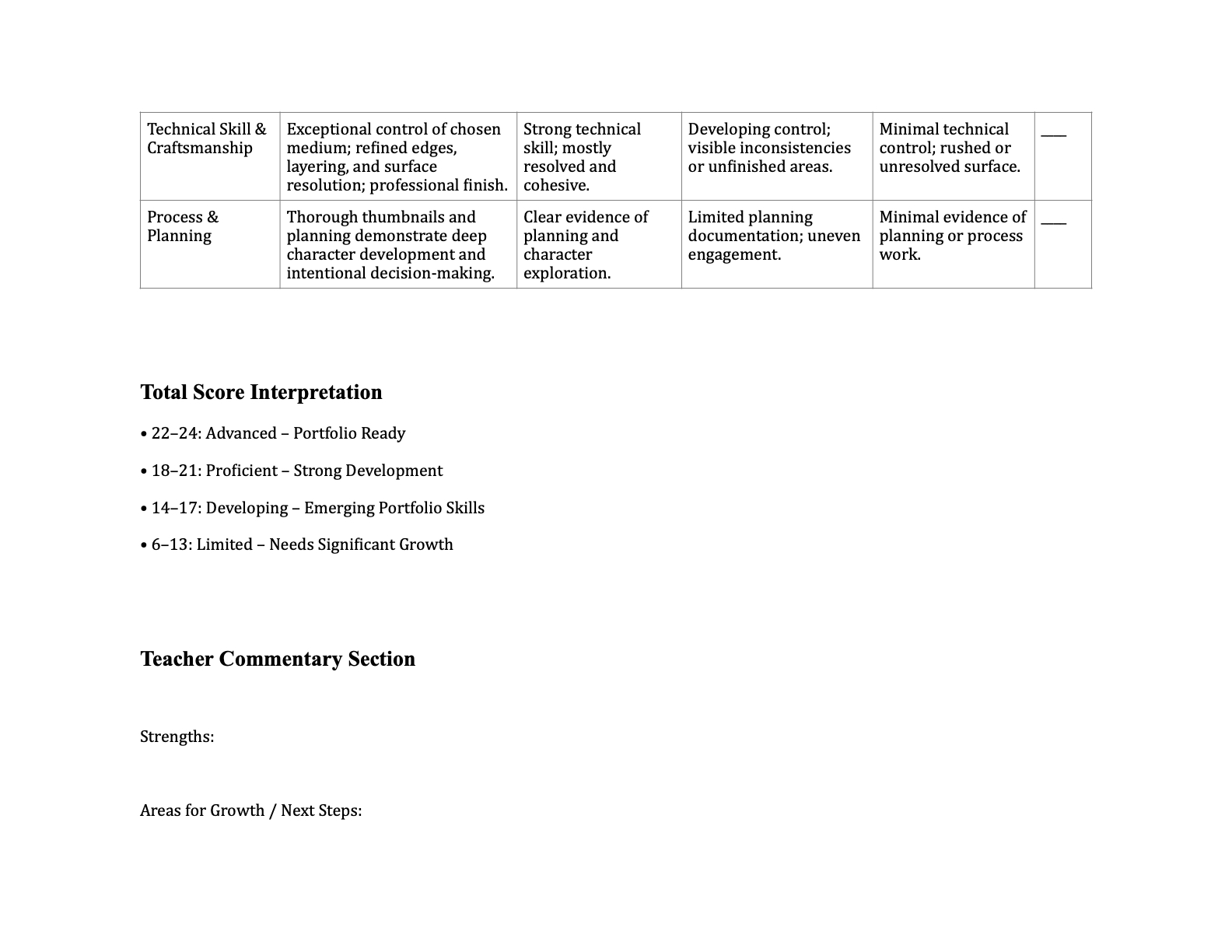
Grading Rubric
Rubrics have become popular with teachers as a means of communicating expectations for an assignment, providing focused feedback on works in progress, and grading final products. A rubric is a document that articulates the expectations for an assignment by listing the criteria, or what counts, and describing levels of quality from excellent to poor.
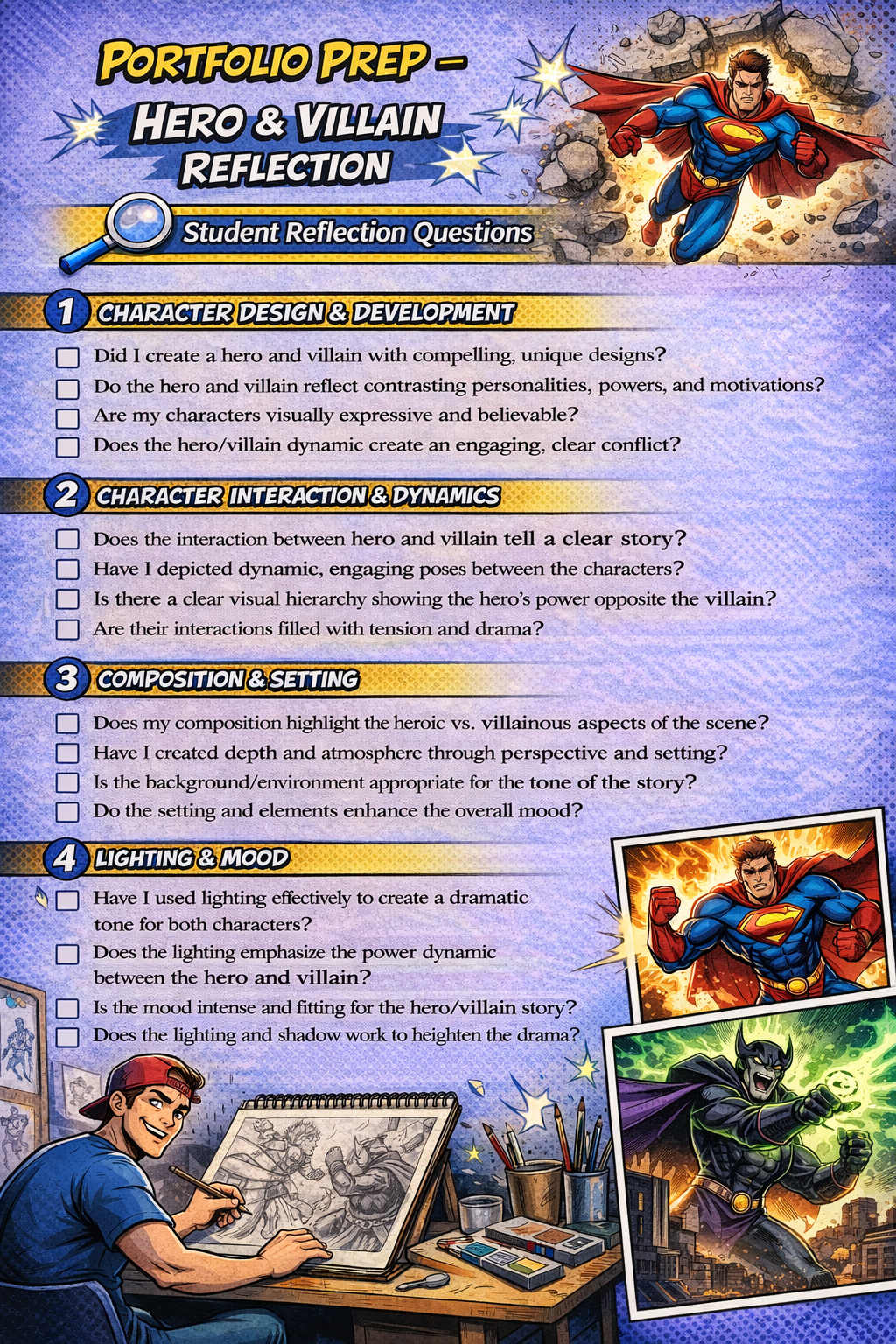
Student Reflection
A student reflection is a brief, thoughtful explanation of how and why a student created their artwork, including the choices they made, challenges they faced, and what they learned during the process. In art, reflection is important because it helps students develop critical thinking, recognize growth, strengthen their creative decision-making, and take ownership of their artistic development.
Element of Art & Principle of Design
Comic Book Artists
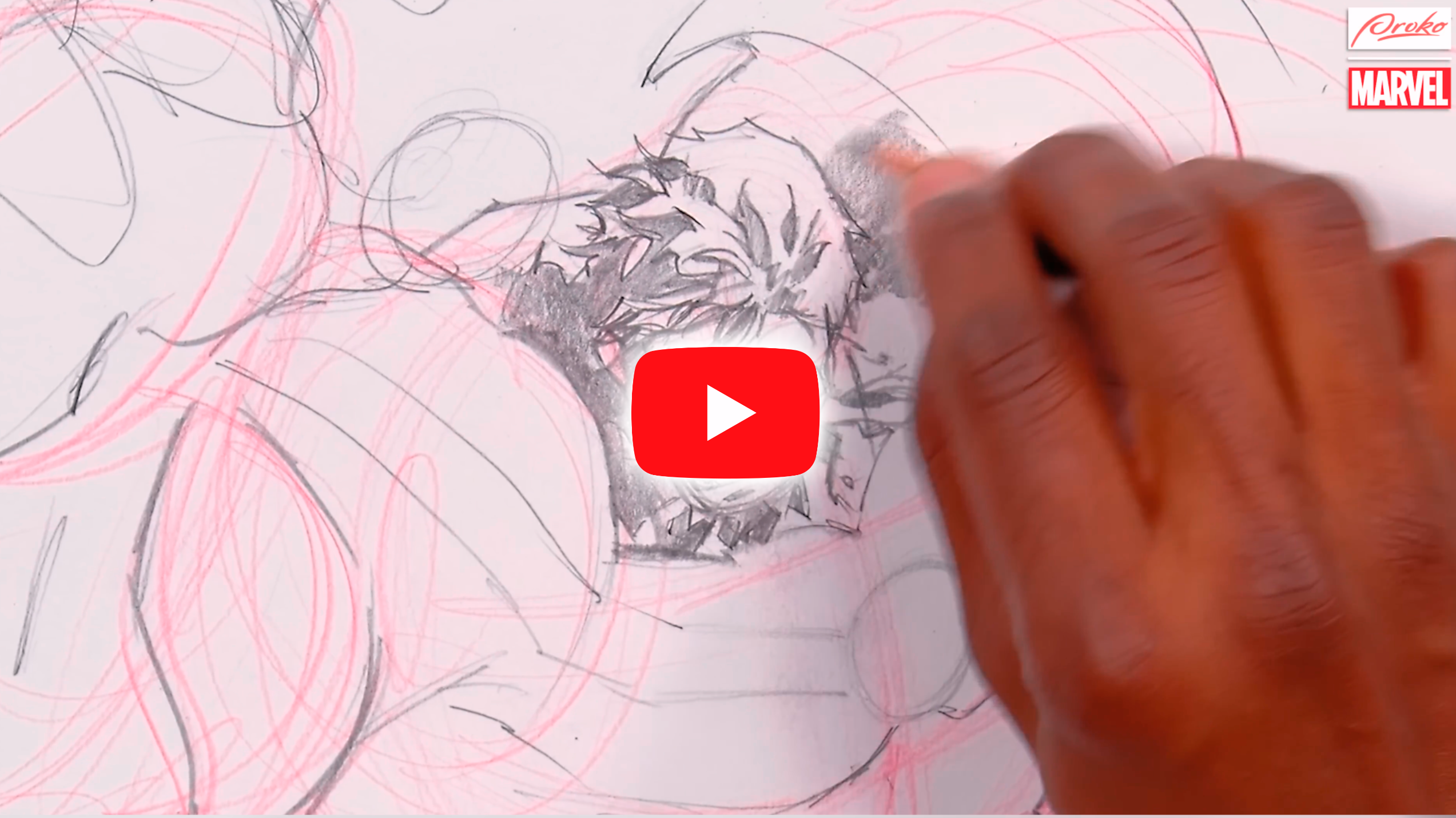
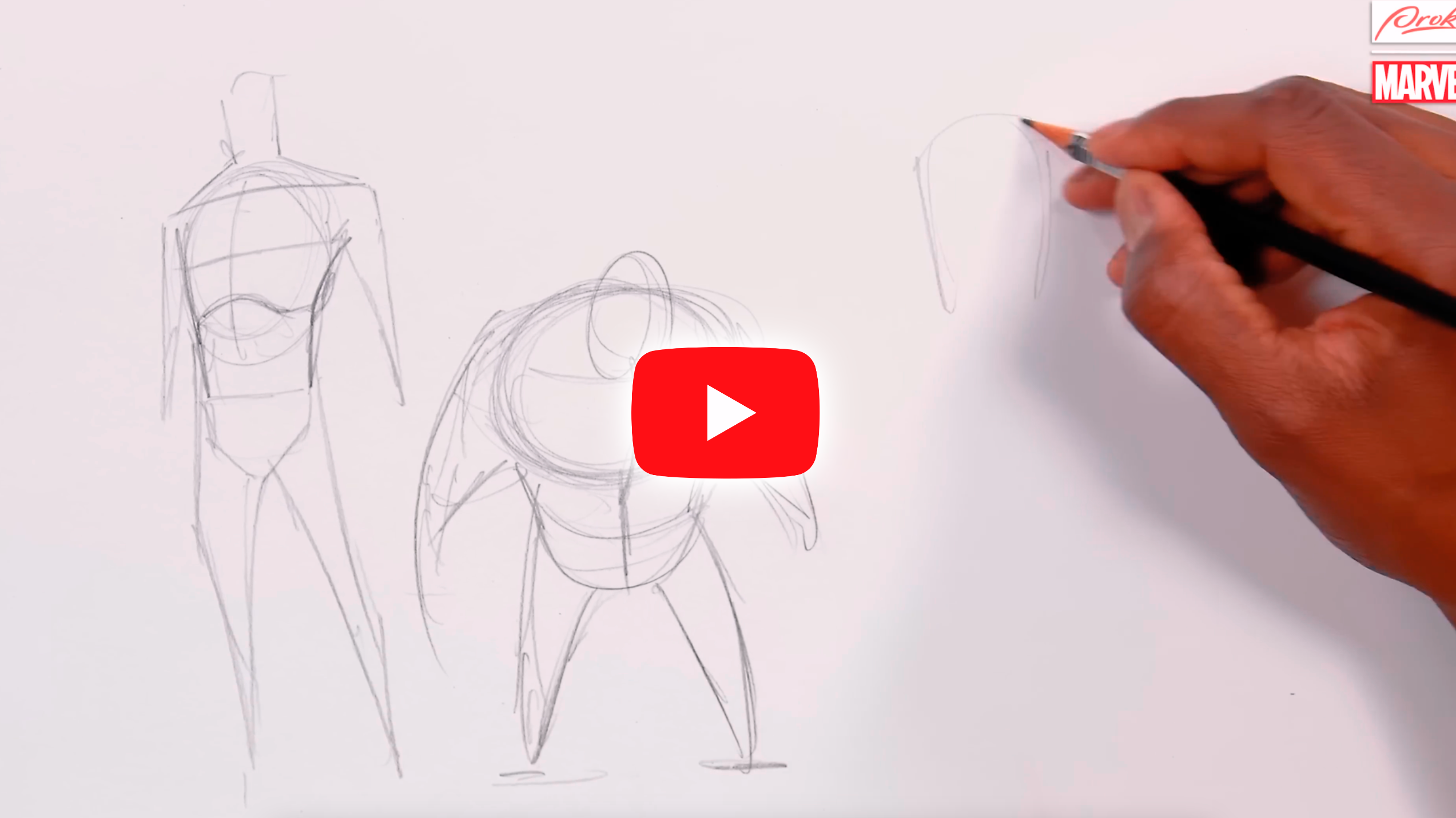
Demonstrations
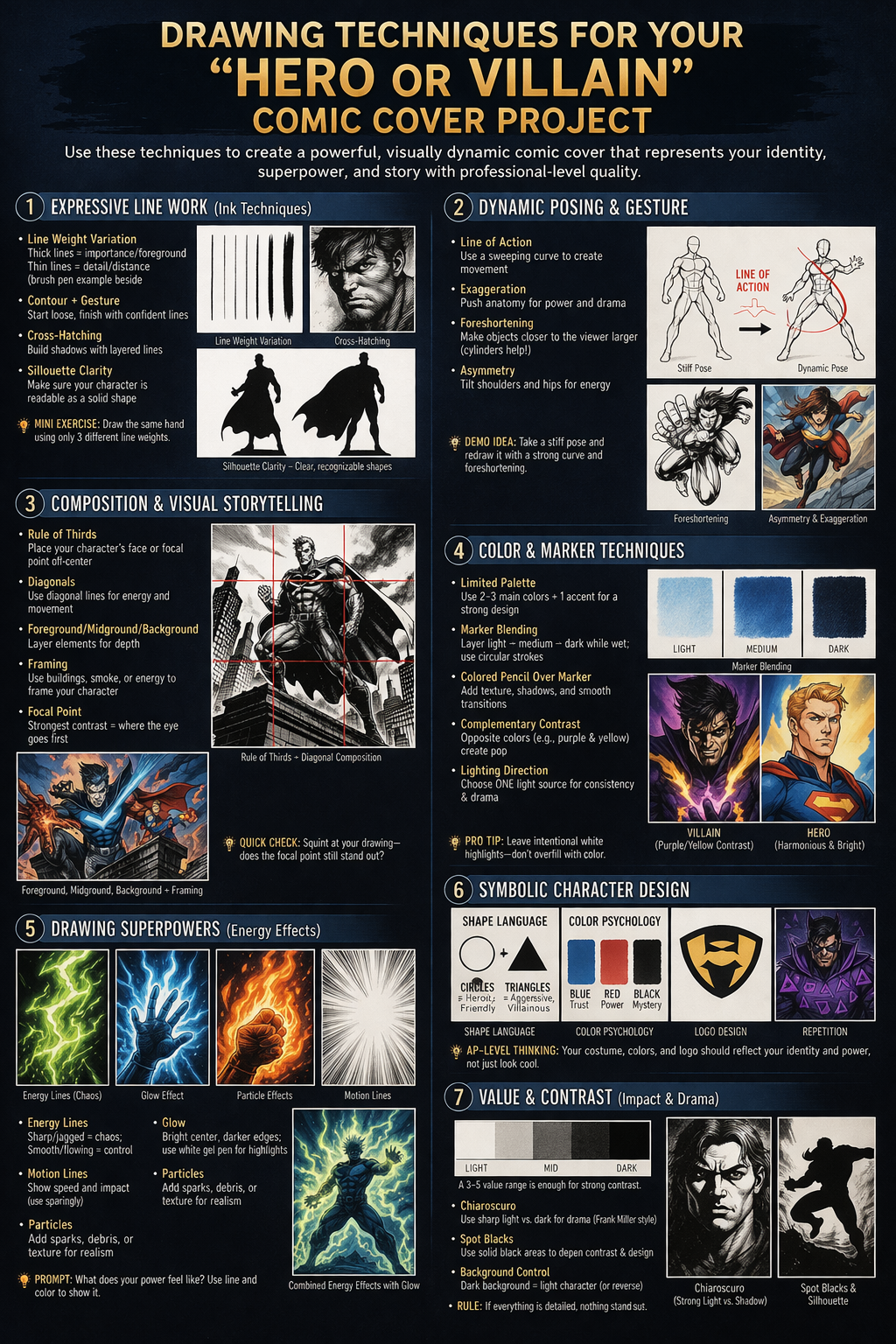
Techniques
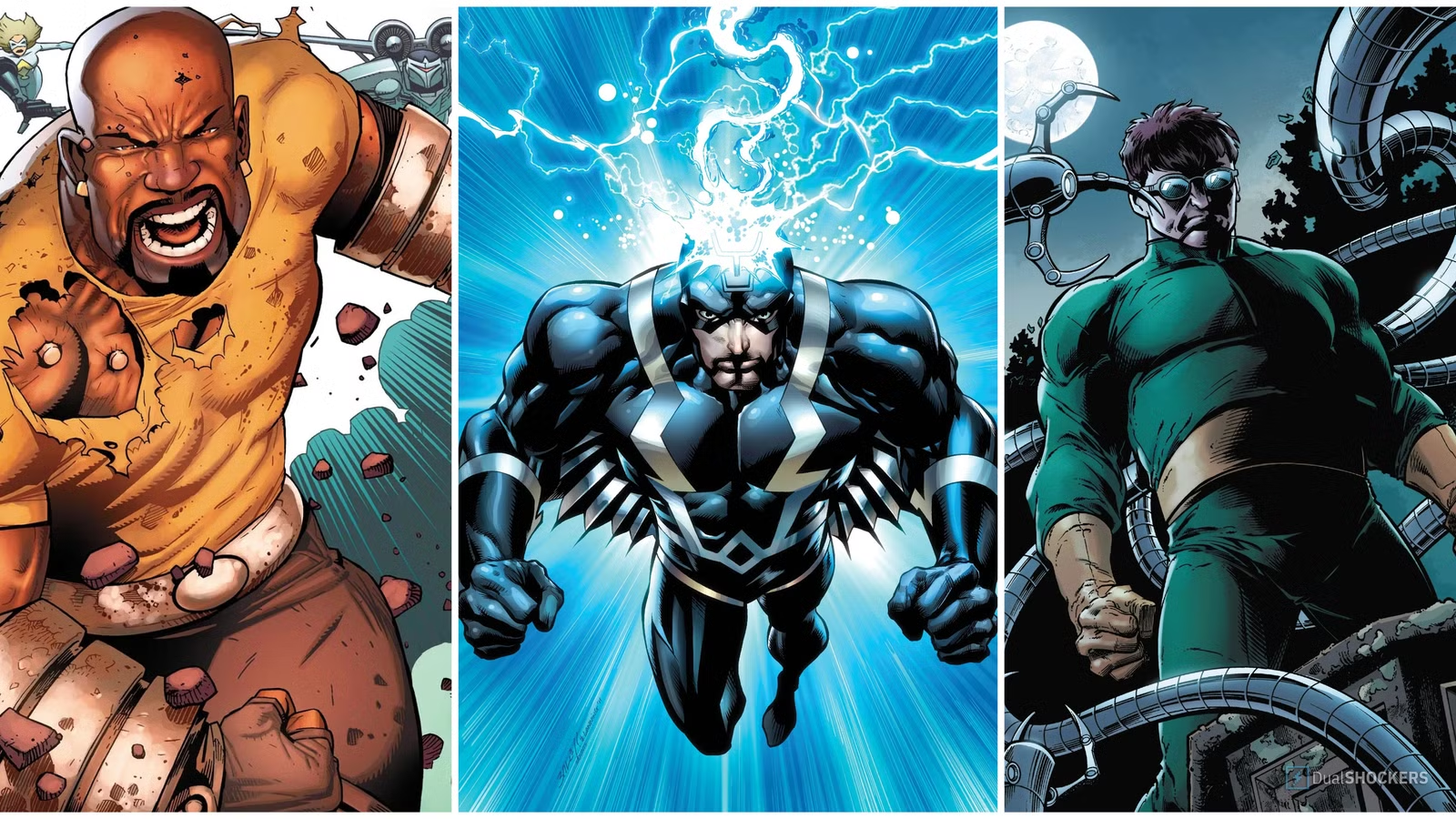
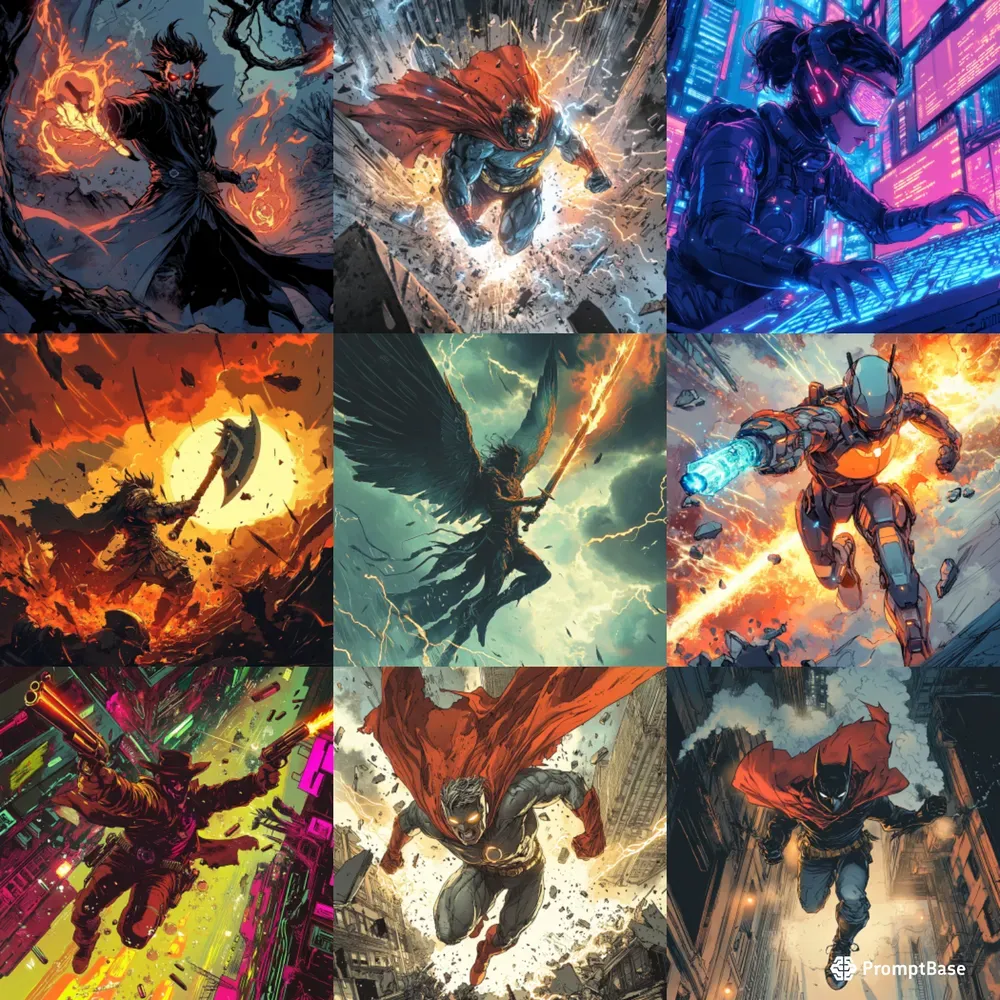
Examples
“Creativity takes courage.”
Cloverleaf High School
Follow Us