
Landscape vs. Architecture
Project Overview
Theme: Designing Space & Living Environment
In this AP-level drawing and design investigation, students will explore the relationship between natural landscape and architectural structure by designing their own home and its surrounding environment. This project requires students to create two complementary works:
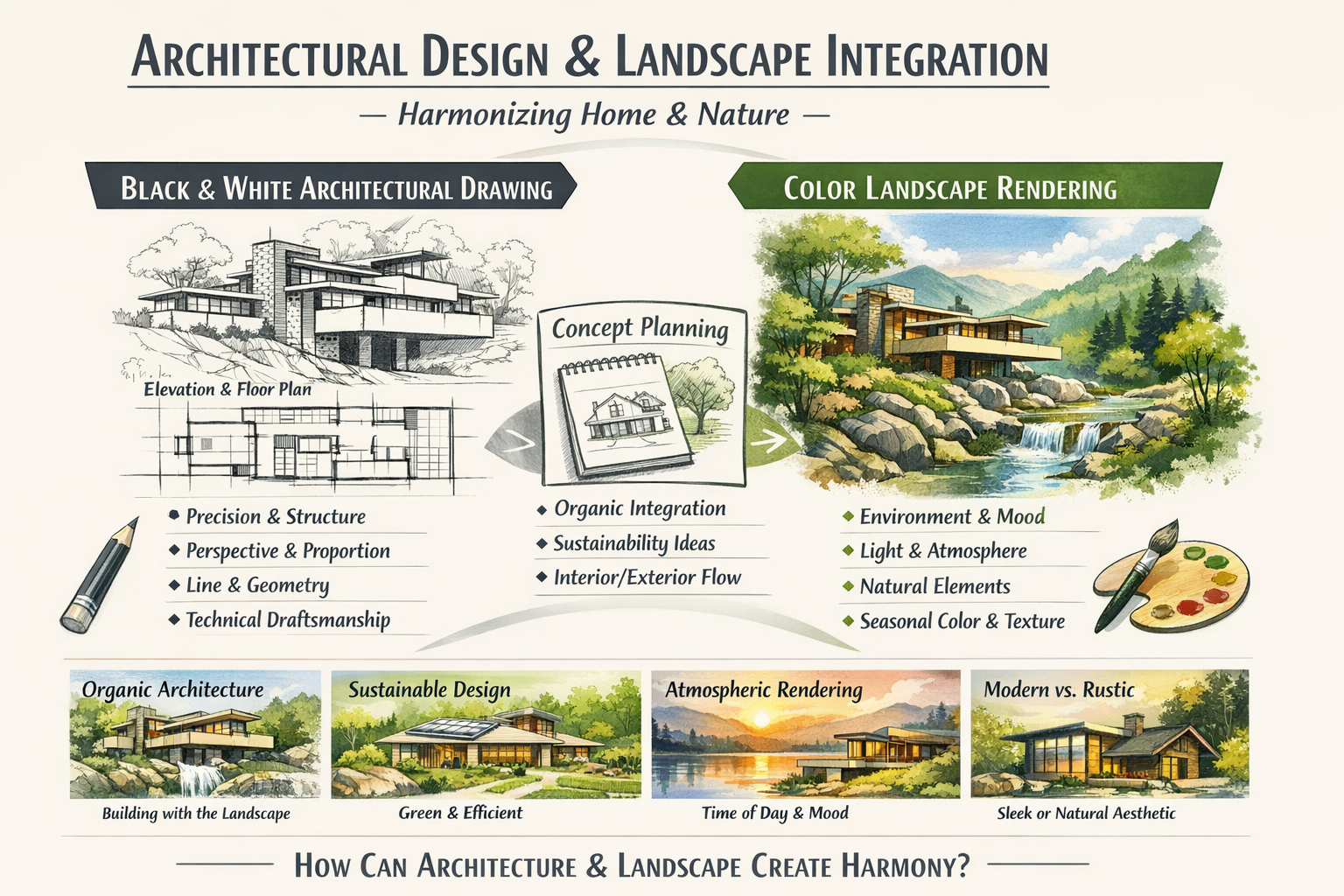
A black and white architectural drawing focused on structure, precision, and spatial planning.
A color landscape rendering that situates the home within its environmental context.
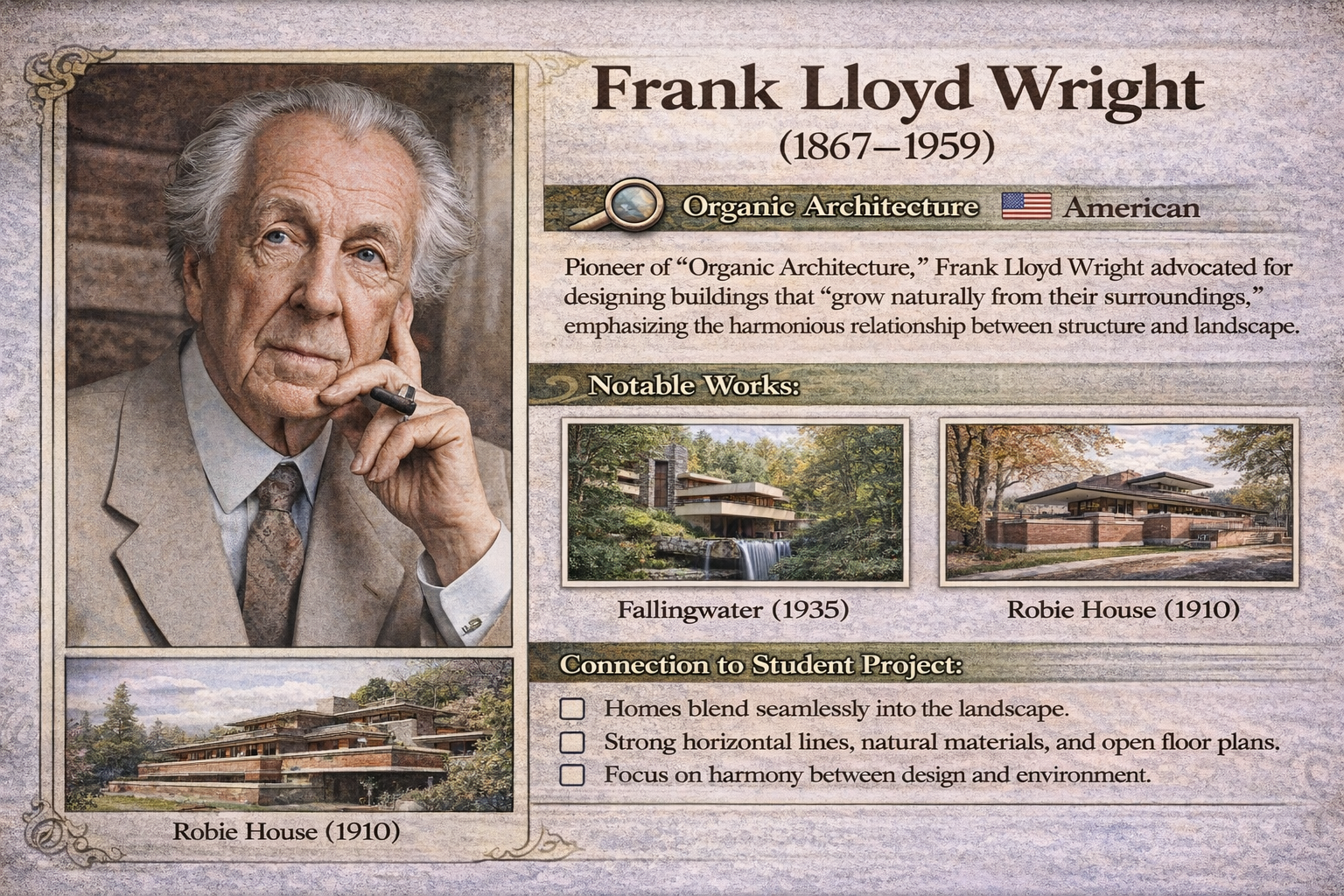
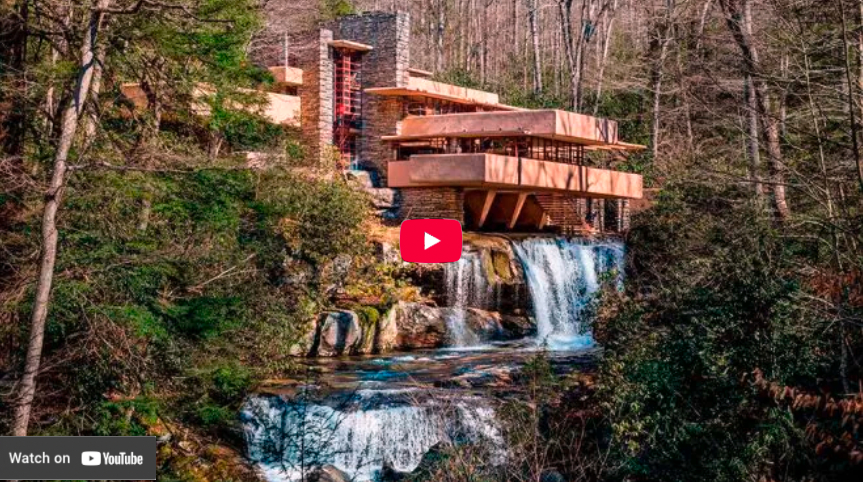
Inspired by the organic architecture of Frank Lloyd Wright, students will examine how built structures can harmonize with nature. Wright believed architecture should grow from its surroundings rather than dominate them. Students will explore how line, proportion, balance, and material choice influence both aesthetic and functional design.
This assignment pushes students beyond observational drawing and into conceptual design. They must consider not only how a house looks, but how it functions, how it relates to land, and how environment shapes human experience.
Students will draft floor plans and elevation views in black and white to emphasize clarity, structure, and design logic. In contrast, the landscape drawing will use color to communicate mood, atmosphere, time of day, and environmental integration.
The goal is to create a cohesive design vision where architecture and landscape are intentionally connected rather than separate visual ideas.
The final work should reflect AP-level craftsmanship, compositional planning, spatial awareness, and conceptual depth.
AP Studio Focus
This assignment supports:
Sustained Investigation: Exploring personal identity, lifestyle, sustainability, and environmental integration through architectural design.
Material Practice: Demonstrating technical precision in architectural drafting and expressive control in landscape rendering.
Visual Evidence of Inquiry: Showing development from preliminary floor plans and thumbnails to refined final compositions.
Objective
Students will:
Design a conceptual home that reflects personal values, needs, or lifestyle.
Create a detailed black and white architectural drawing (floor plan and/or elevation).
Develop a color landscape rendering that integrates the structure into its environment.
Demonstrate understanding of perspective, proportion, and spatial relationships.
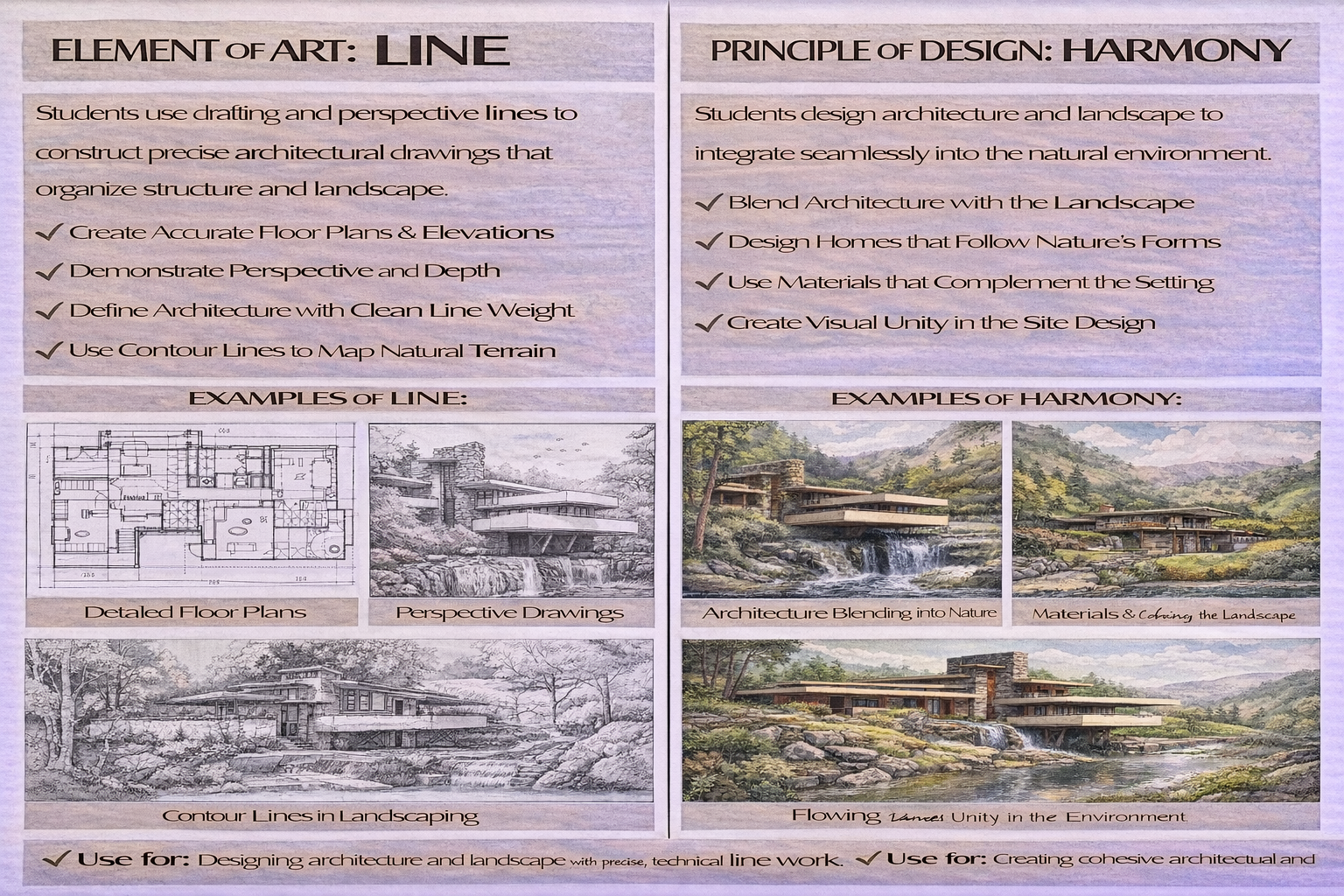
Apply principles of design such as balance, rhythm, scale, and harmony.
Produce a cohesive final presentation showing both structural logic and environmental atmosphere.
Possible Approaches
Students may explore:
Organic Architecture: Designing structures that follow the natural lines of the land.
Sustainability Concepts: Incorporating natural light, green roofs, or environmental features.
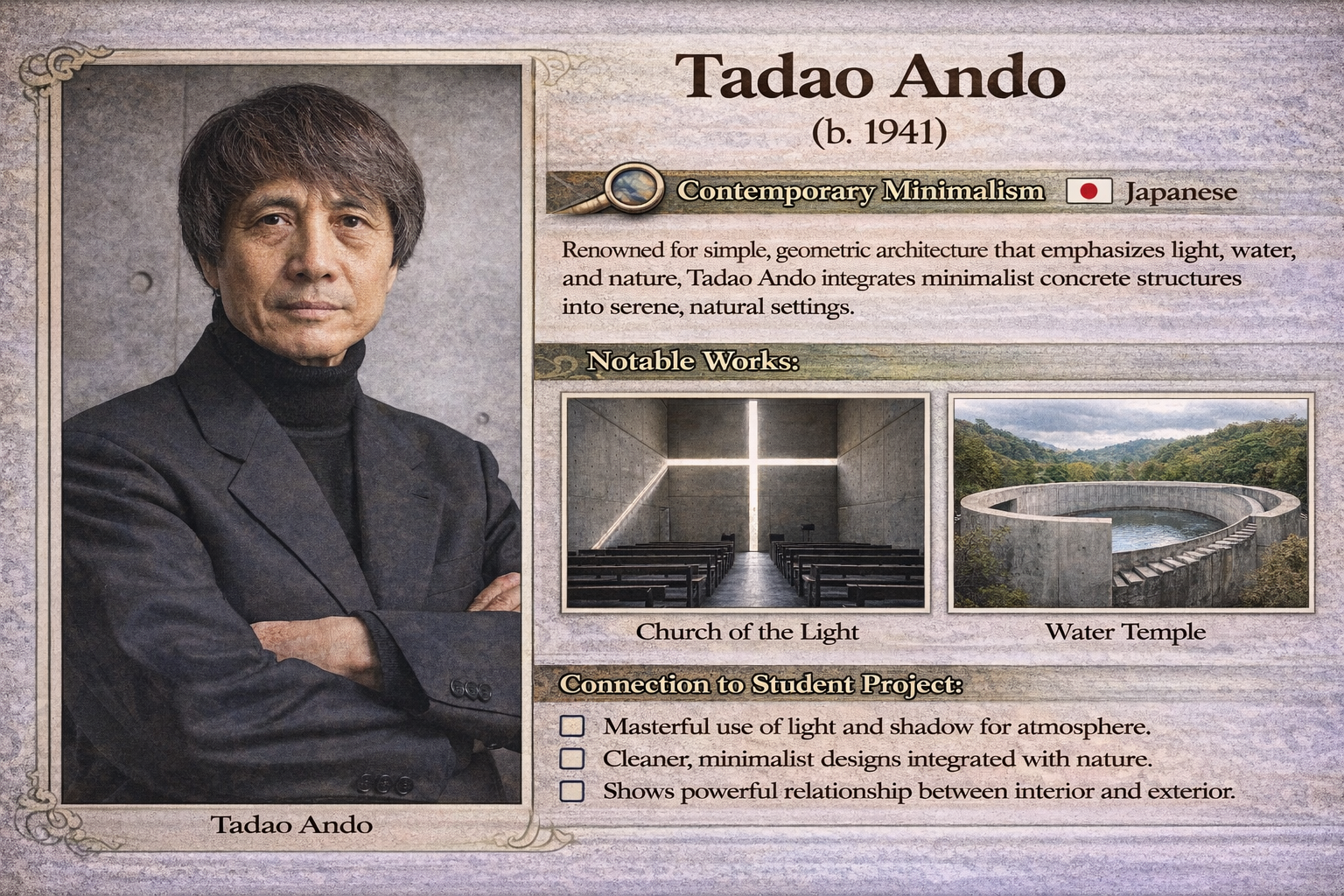
Modern Minimalism vs. Rustic Integration: Contrast between geometry and natural texture.
Atmospheric Rendering: Time of day, weather, or seasonal color to enhance mood.
Interior/Exterior Flow: Open floor plans, window placement, and spatial movement.
Essential Question
How can architectural design and landscape work together to create a space that reflects both personal identity and environmental harmony?
Learning Objectives / Student Targets
By the end of this project, students will be able to:
Concept Development & Design Thinking
* Develop a conceptual plan for a personal home that reflects lifestyle, values, and environment.
* Analyze how architectural design communicates identity and function.
* Explore the relationship between structure and surrounding landscape.
* Apply principles inspired by Frank Lloyd Wright’s concept of organic architecture.
Architectural Drawing & Technical Skill (Black & White)
* Create a detailed architectural drawing (floor plan and/or elevation) using precision and proportional accuracy.
* Demonstrate understanding of scale, spatial relationships, and structural organization.
* Use line weight, shading, and contrast to clarify structure and hierarchy.
* Present a clean, professional-quality black and white rendering that emphasizes clarity and design logic.
Landscape Rendering & Color Application
* Use color intentionally to create mood, atmosphere, and environmental context.
* Demonstrate control of value, blending, and color harmony in landscape rendering.
* Integrate the architectural structure seamlessly into the surrounding natural environment.
* Apply principles of perspective and depth to create believable space.
Composition & Spatial Awareness
* Organize architectural and landscape elements to create visual balance and unity.
* Establish focal areas and guide viewer movement through compositional planning.
* Demonstrate understanding of proportion between human scale, building scale, and natural scale.
* Create a cohesive presentation that connects technical drafting and expressive rendering.
Creative & Critical Thinking
* Solve design challenges related to structure, function, and environment.
* Experiment with innovative layouts or environmental integration.
* Make intentional revisions based on critique and feedback.
* Consider sustainability and environmental harmony in design decisions.
Reflection & Artistic Growth
* Articulate how the design reflects personal identity or values.
* Evaluate how effectively architecture and landscape work together.
* Reflect on growth in technical drafting, perspective, and color rendering skills.
* Demonstrate increased confidence in combining precision drawing with expressive techniques.
Ohio Fine Arts Standards (Visual Arts)
VA:Cr1 – Generate & Conceptualize Artistic Ideas
* VA:Cr1.1.HSI Use multiple approaches to begin creative endeavors (e.g., floor plan sketches, thumbnail landscape studies, perspective drafts).
* VA:Cr1.2.HSI Shape an artistic investigation of personal experience or contemporary life (e.g., designing a home that reflects lifestyle, identity, or environmental values).
VA:Cr2 – Organize & Develop Artistic Work
* VA:Cr2.1.HSI Select and experiment with materials, tools, and techniques to shape artistic ideas into a resolved work of art (architectural drafting, perspective drawing, color rendering).
* VA:Cr2.2.HSI Demonstrate quality craftsmanship through careful selection, handling, and refinement of materials and processes.
VA:Cr3 – Refine & Complete Artistic Work
* VA:Cr3.1.HSI Apply relevant criteria to examine, reflect on, and plan revisions for works of art and design.
* VA:Cr3.2.HSI Engage in constructive critique and self-reflection to strengthen clarity of artistic intent and spatial accuracy.
VA:Re7 – Perceive & Analyze Artistic Work
* VA:Re7.1.HSI Recognize and describe how knowledge of culture, traditions, and historical context (e.g., Frank Lloyd Wright’s organic architecture) influence artistic design.
* VA:Re7.2.HSI Analyze how elements and principles of design (line, scale, proportion, balance, harmony, perspective) communicate meaning and structure.
VA:Re8 – Interpret Intent & Meaning
* VA:Re8.1.HSI Interpret art by analyzing how subject matter, form, and context contribute to meaning and purpose.
VA:Re9 – Apply Criteria to Evaluate Artistic Work
* VA:Re9.1.HSI Establish and apply criteria to evaluate artistic decisions, technical accuracy, craftsmanship, and compositional effectiveness.
VA:Cn10 – Synthesize & Relate Knowledge & Personal Experiences
* VA:Cn10.1.HSI Create works of art that reflect personal experiences, environmental awareness, or conceptual investigation.
* VA:Cn10.2.HSI Apply visual arts skills and habits of mind to deepen understanding of interdisciplinary connections (e.g., architecture, engineering, environmental design).
VA:Cn11 – Relate Artistic Ideas & Works with Societal, Cultural & Historical Context
* VA:Cn11.1.HSI Analyze how art and design reflect cultural values and environmental relationships across time.
*
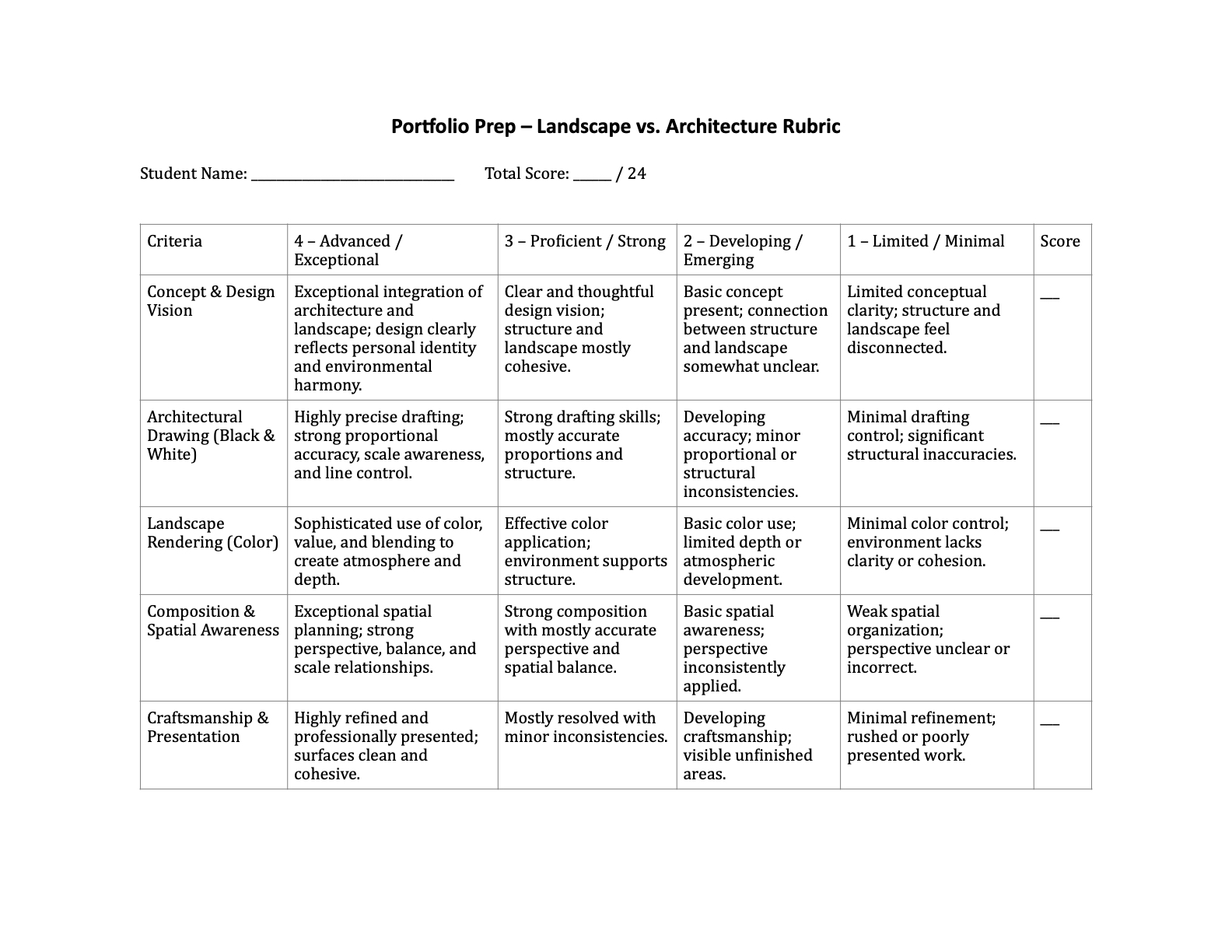
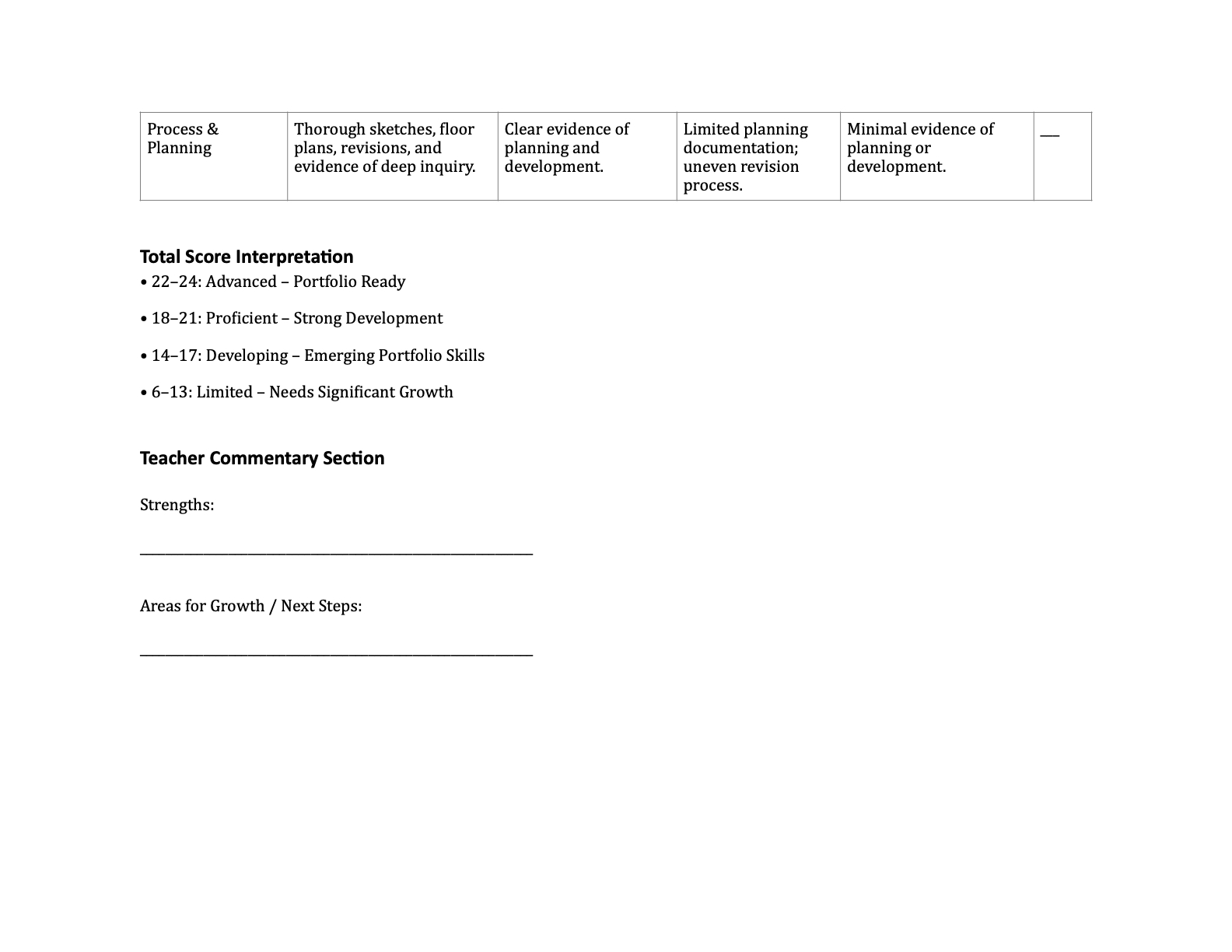
Grading Rubric
Rubrics have become popular with teachers as a means of communicating expectations for an assignment, providing focused feedback on works in progress, and grading final products. A rubric is a document that articulates the expectations for an assignment by listing the criteria, or what counts, and describing levels of quality from excellent to poor.
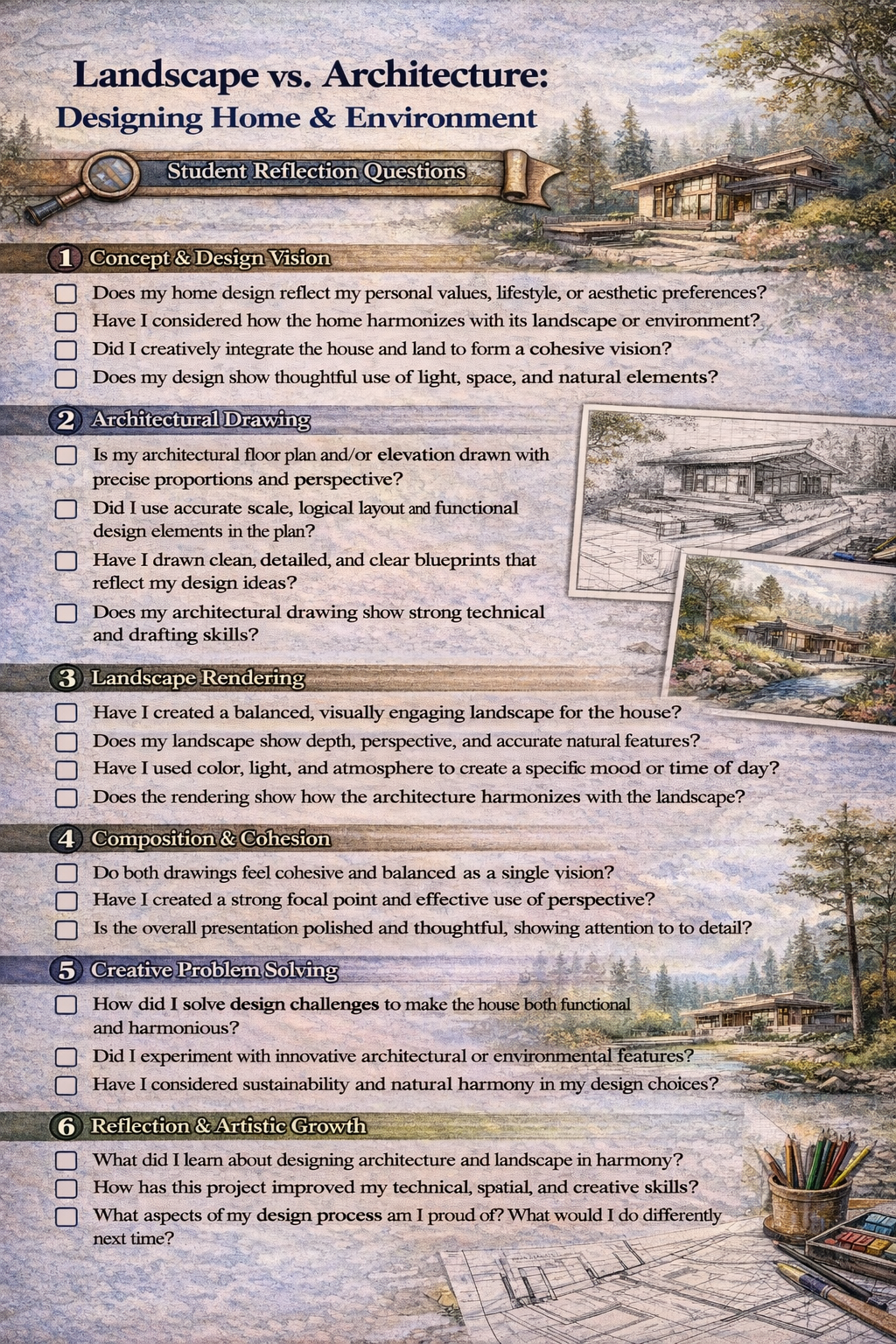
Student Reflection
A student reflection is a brief, thoughtful explanation of how and why a student created their artwork, including the choices they made, challenges they faced, and what they learned during the process. In art, reflection is important because it helps students develop critical thinking, recognize growth, strengthen their creative decision-making, and take ownership of their artistic development.
Element of Art & Principle of Design
Landscape/Architecture Artists
Techniques
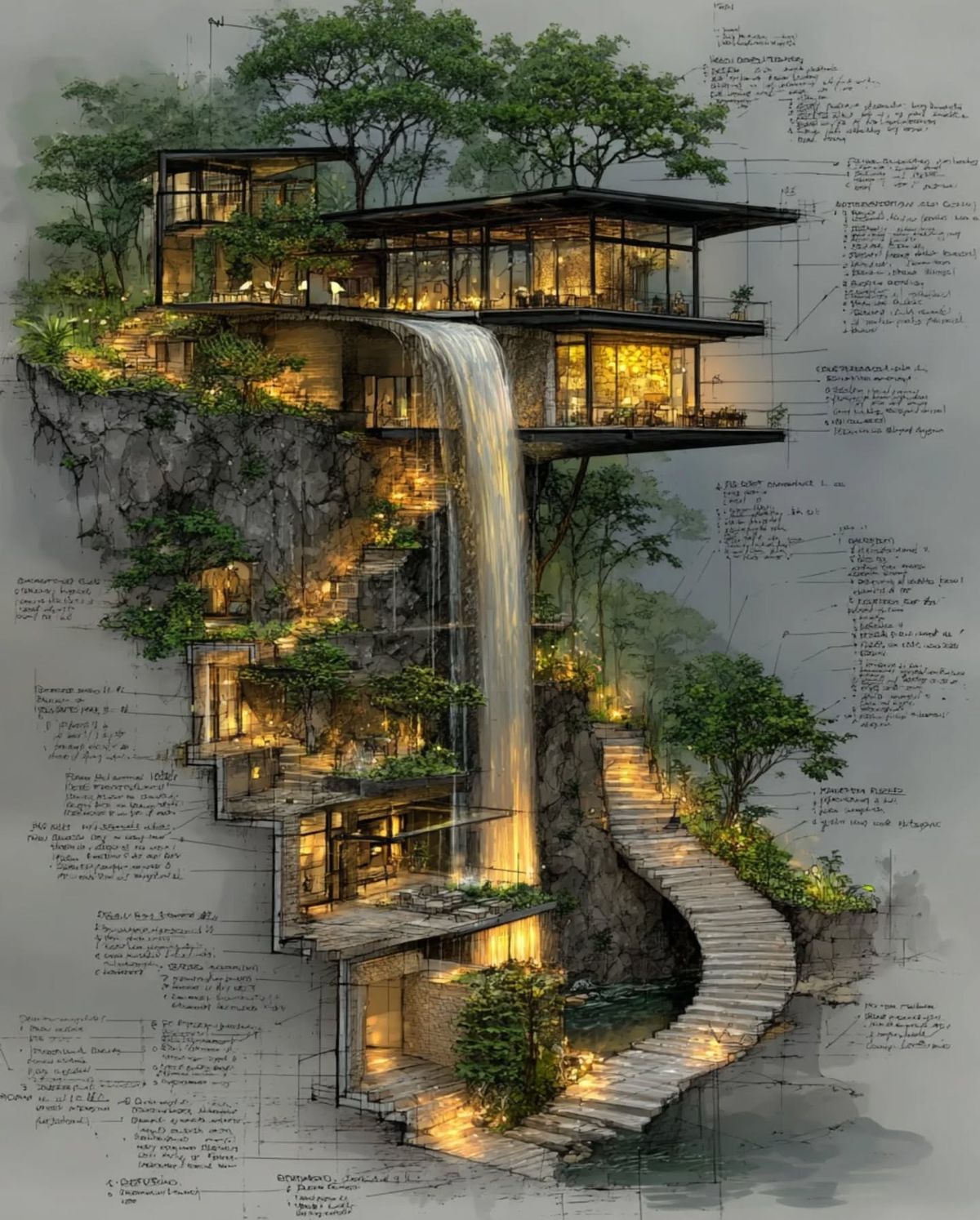
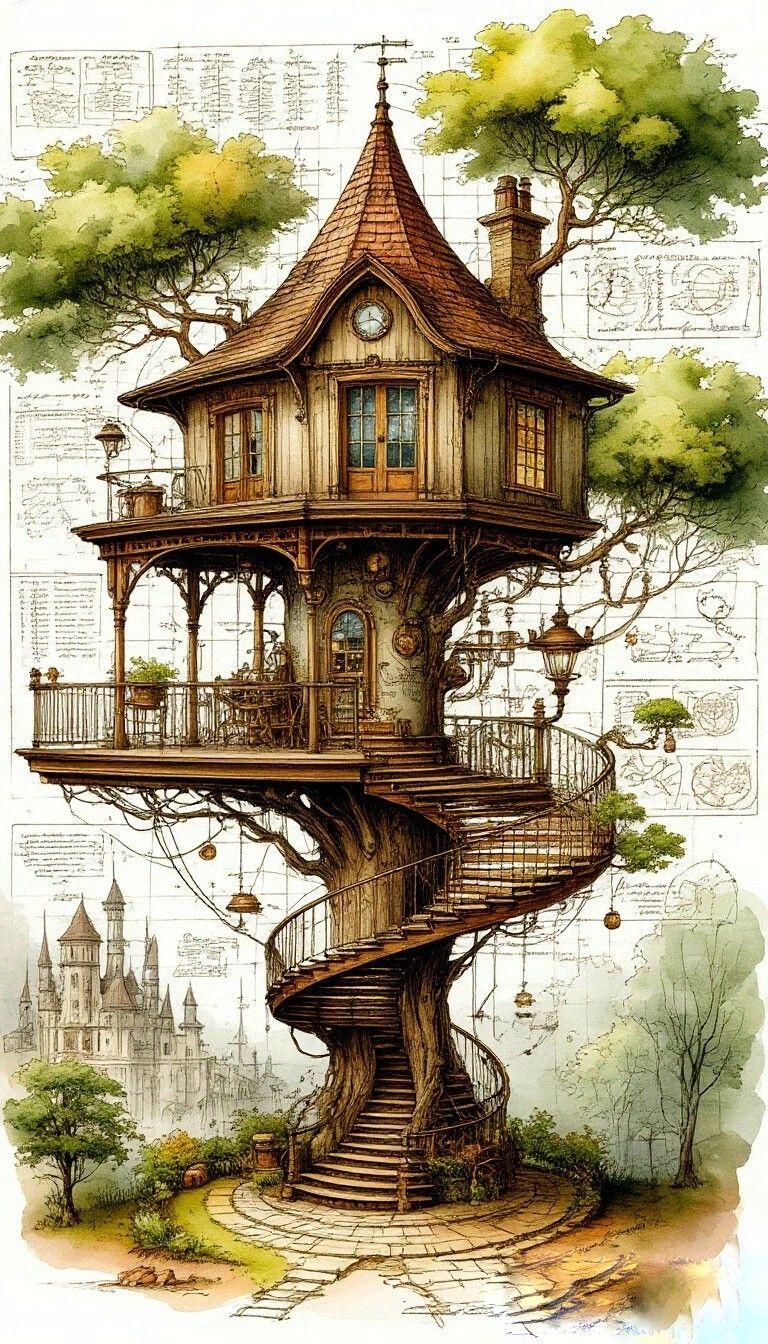
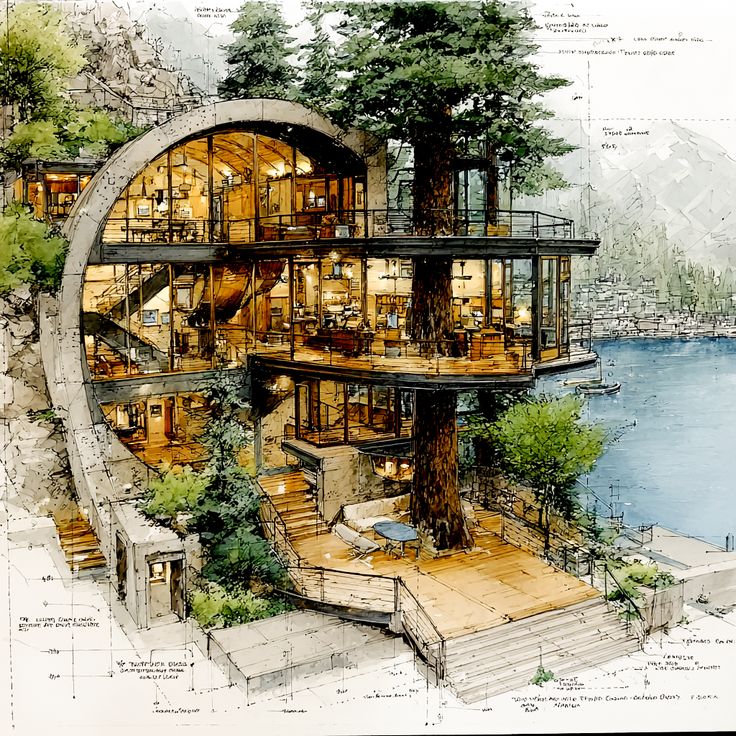
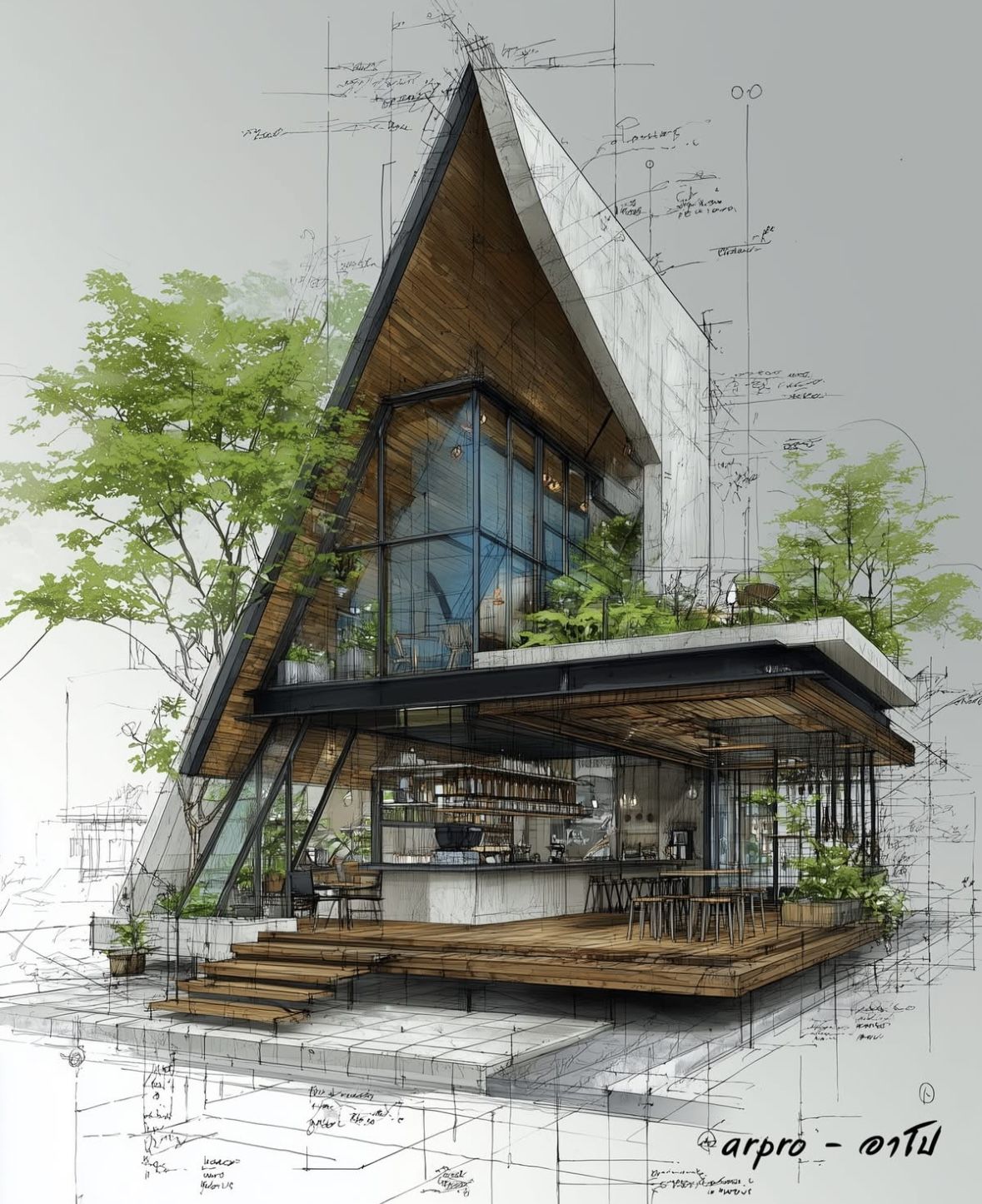
Examples


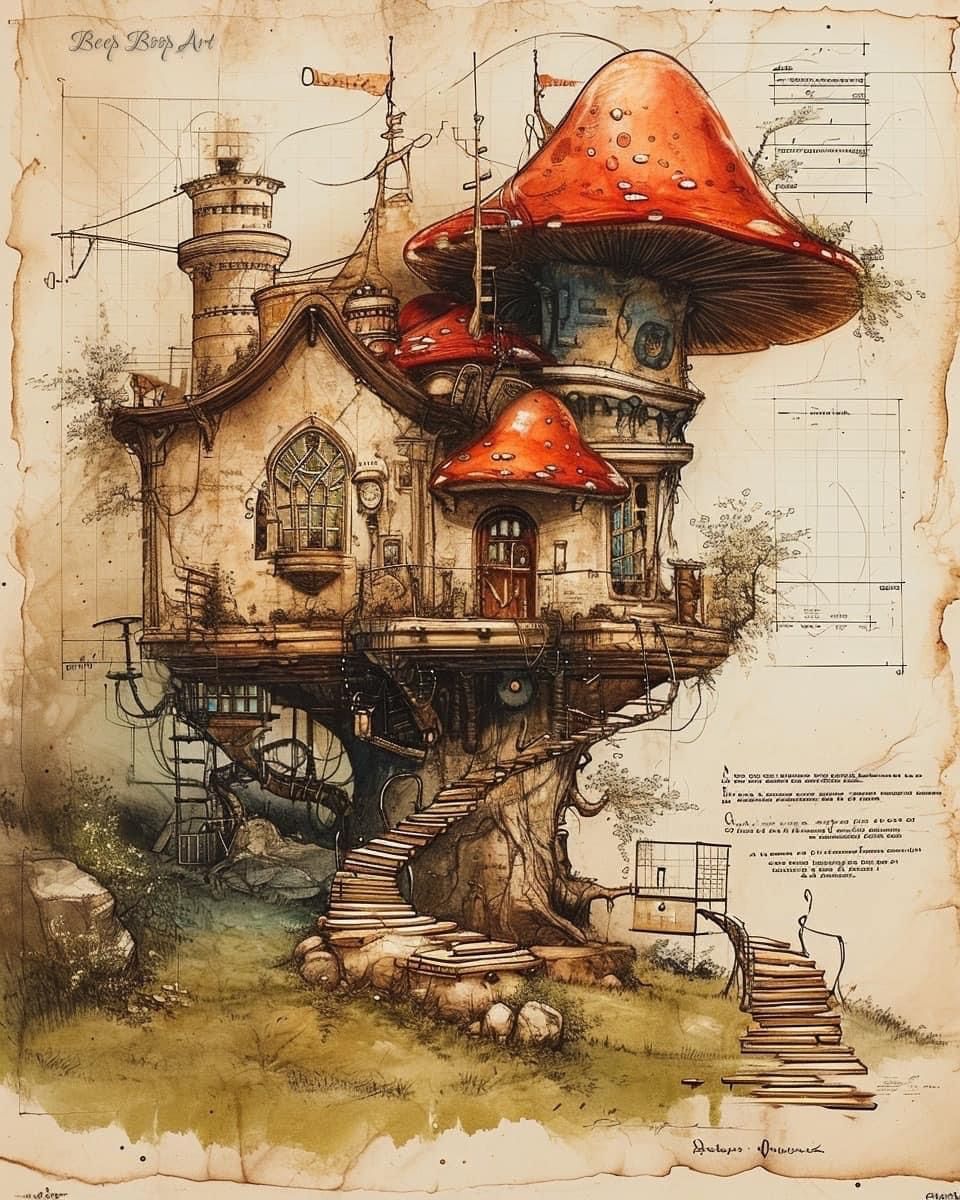
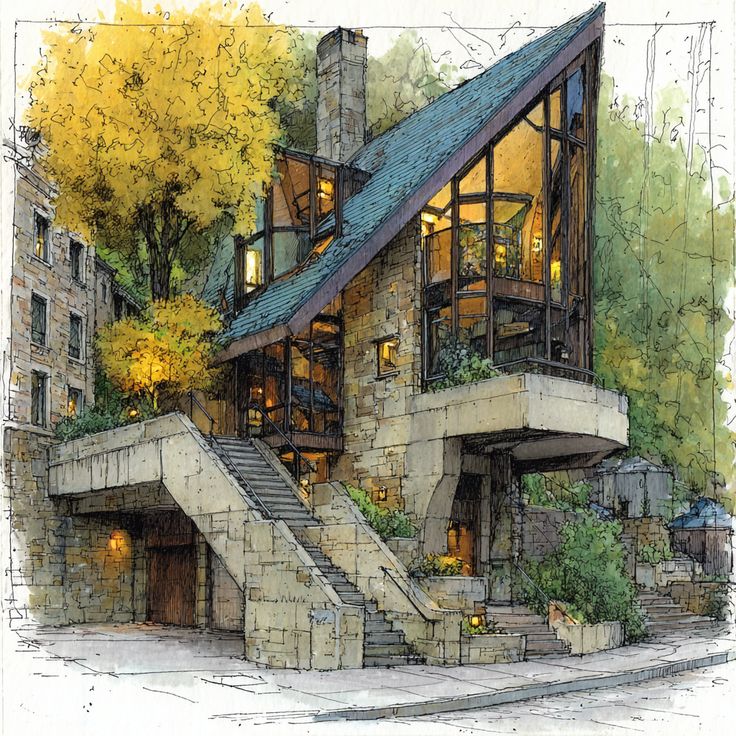
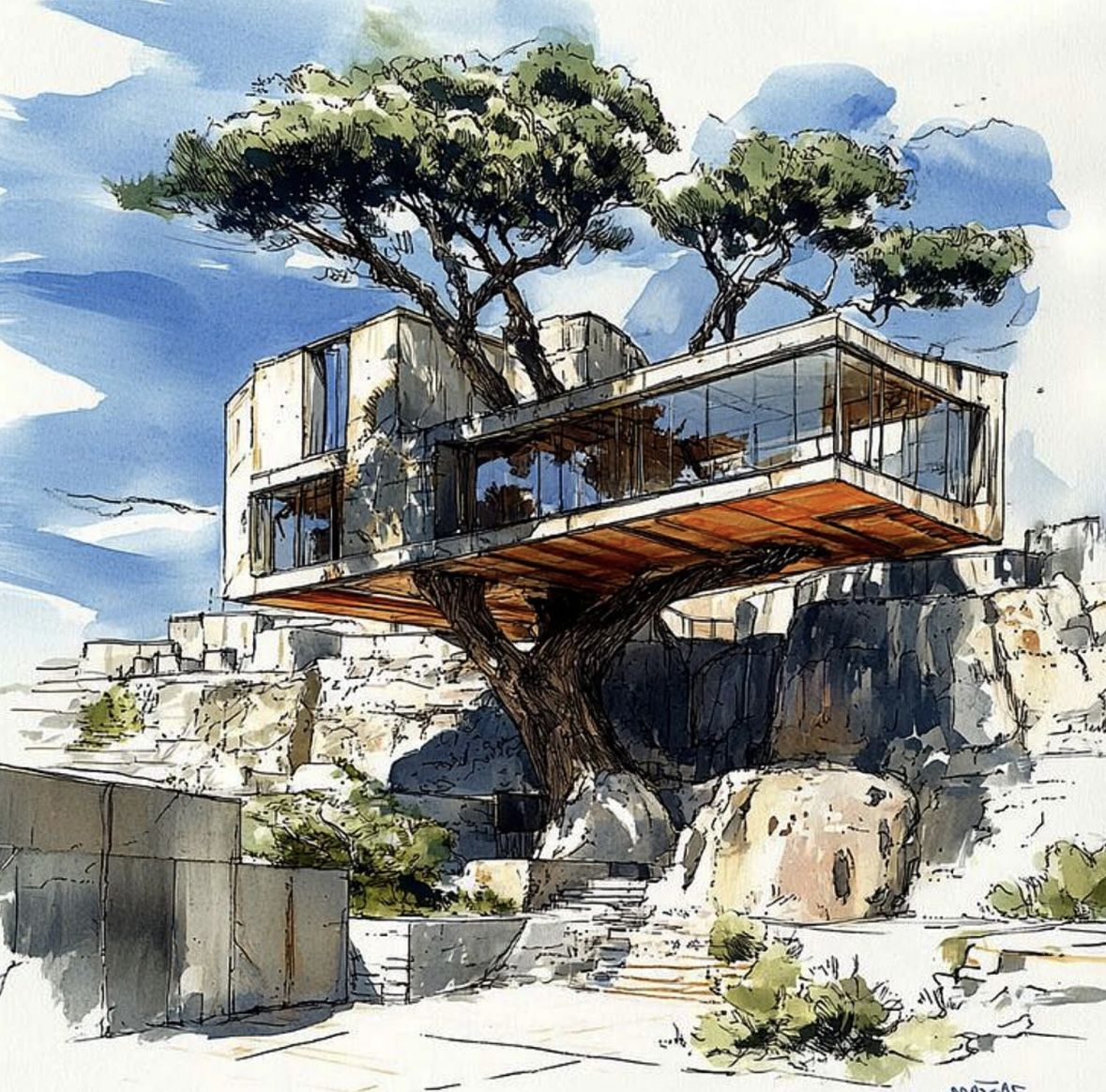
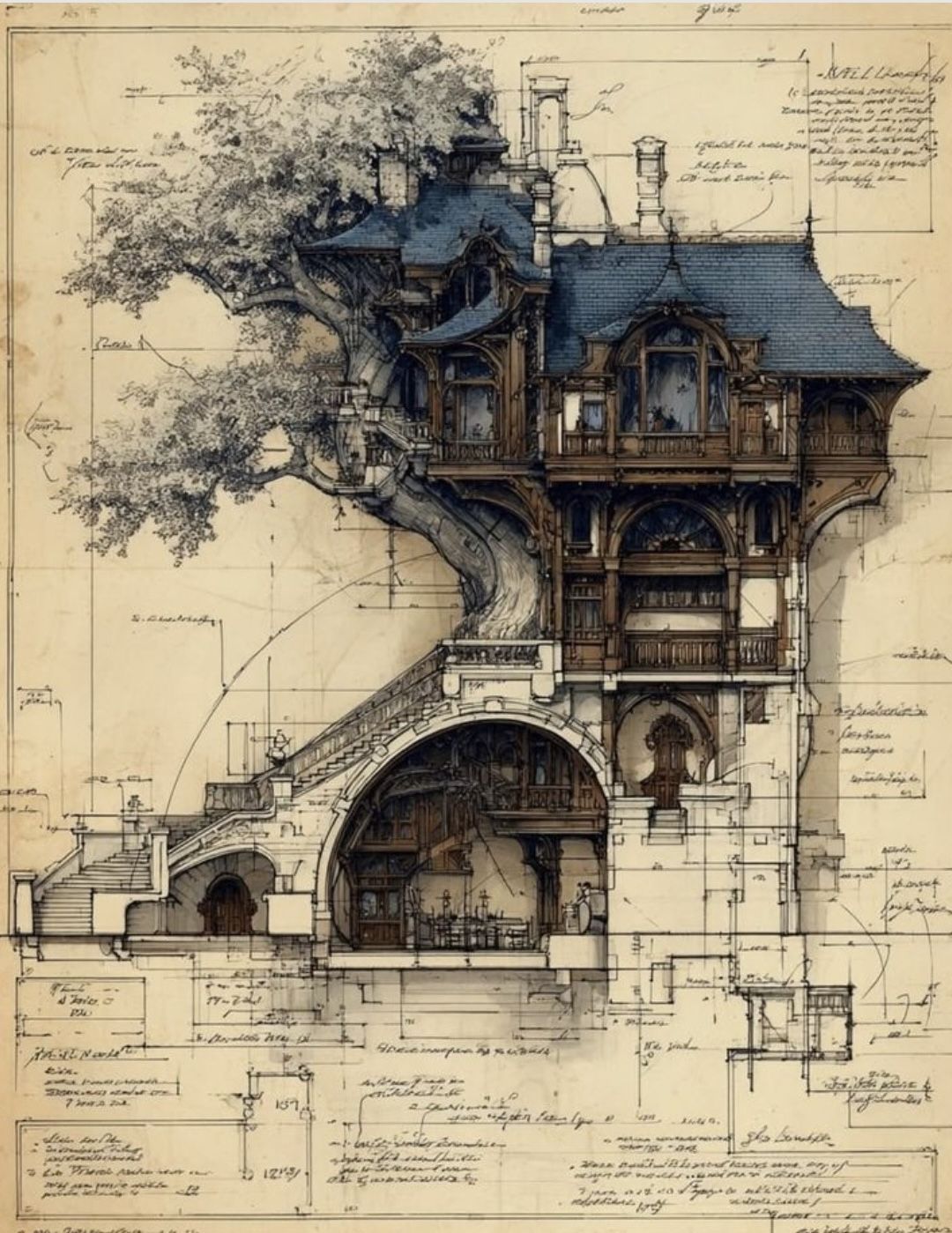
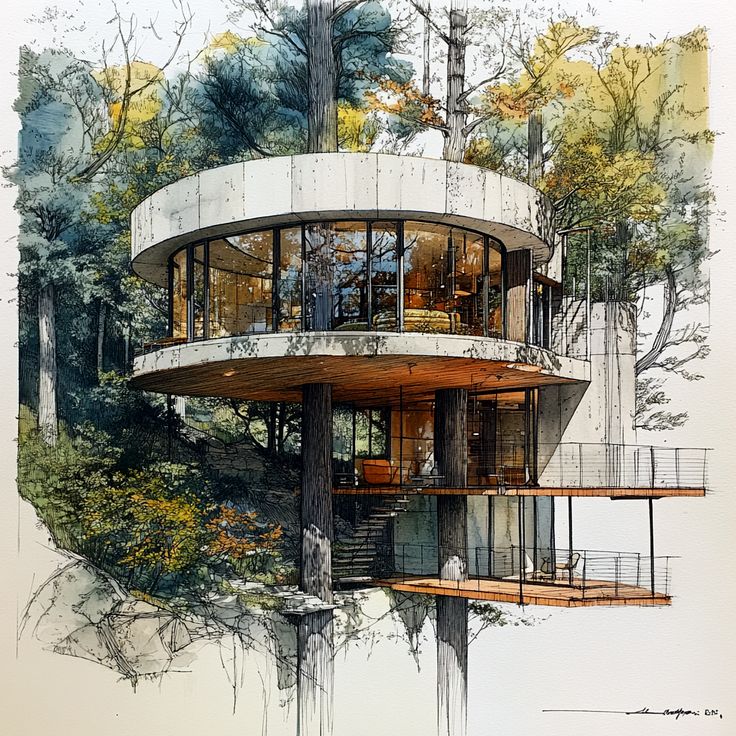
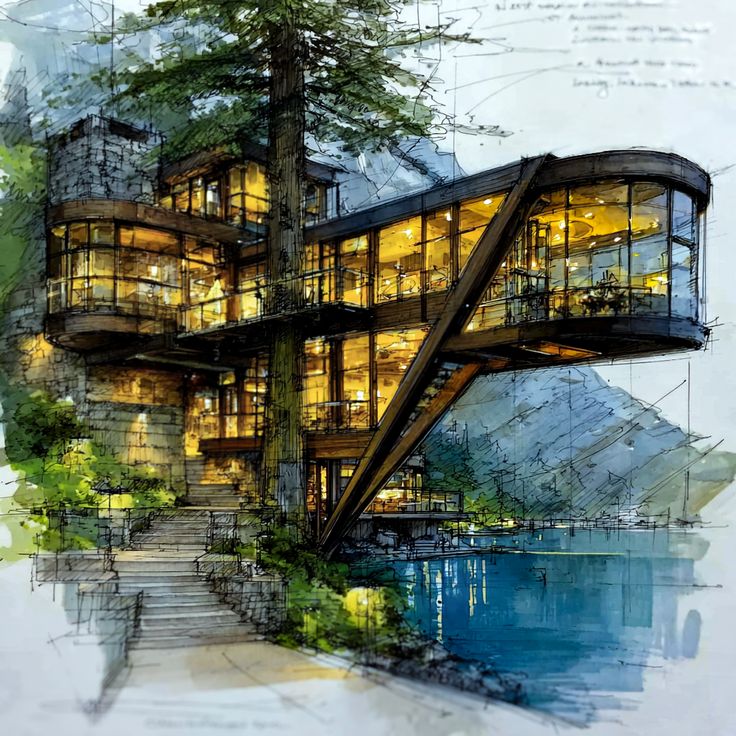

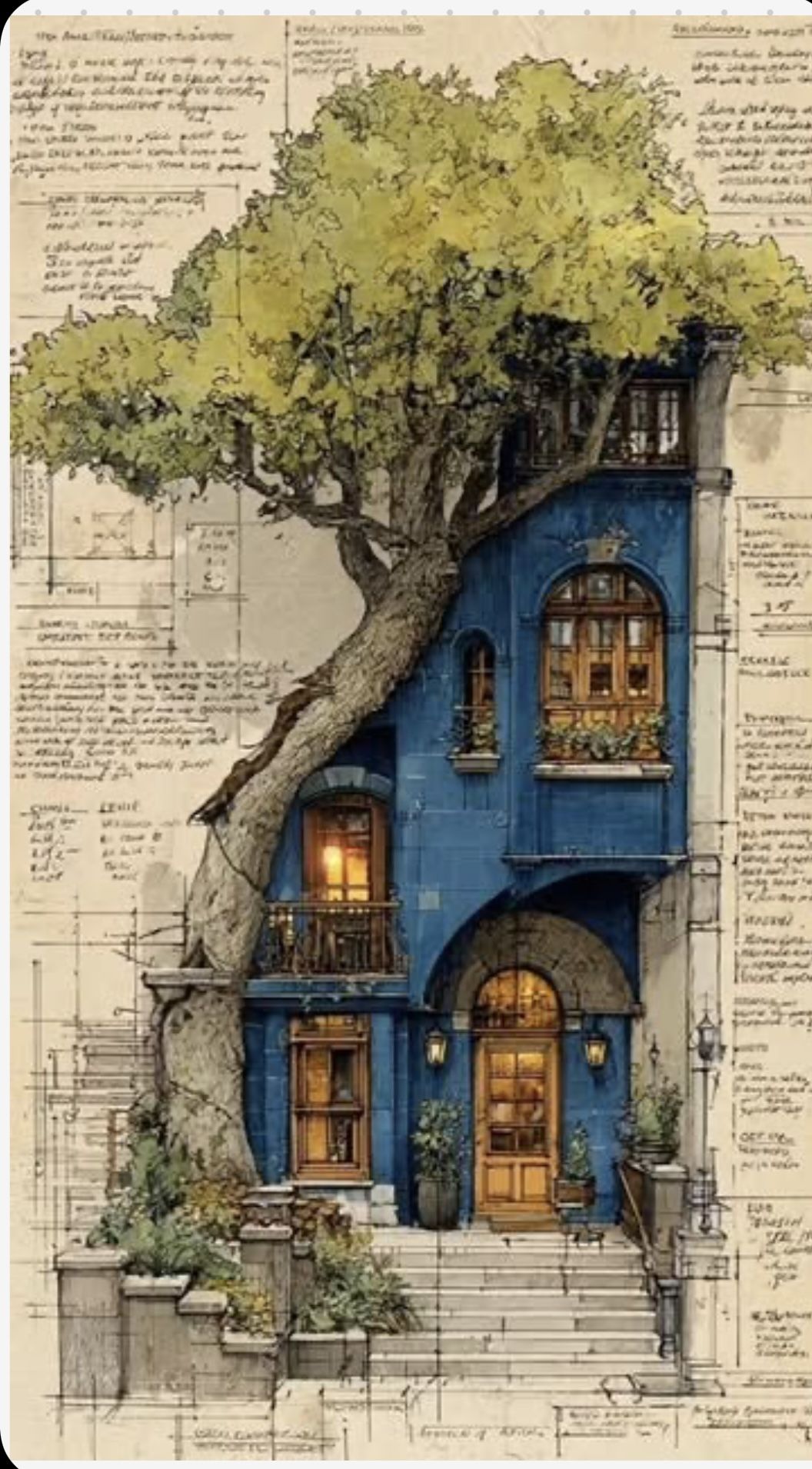
“Creativity takes courage.”

Cloverleaf High School
Follow Us