Object Transformation
Project Overview
Object Transformation Challenge
In this AP-level mixed media and sculptural investigation, students will select a familiar, everyday object and transform it into a concept-driven artwork that challenges its original meaning, function, or context. The object must remain recognizable, but its alteration should communicate a deeper idea, commentary, or emotional narrative.
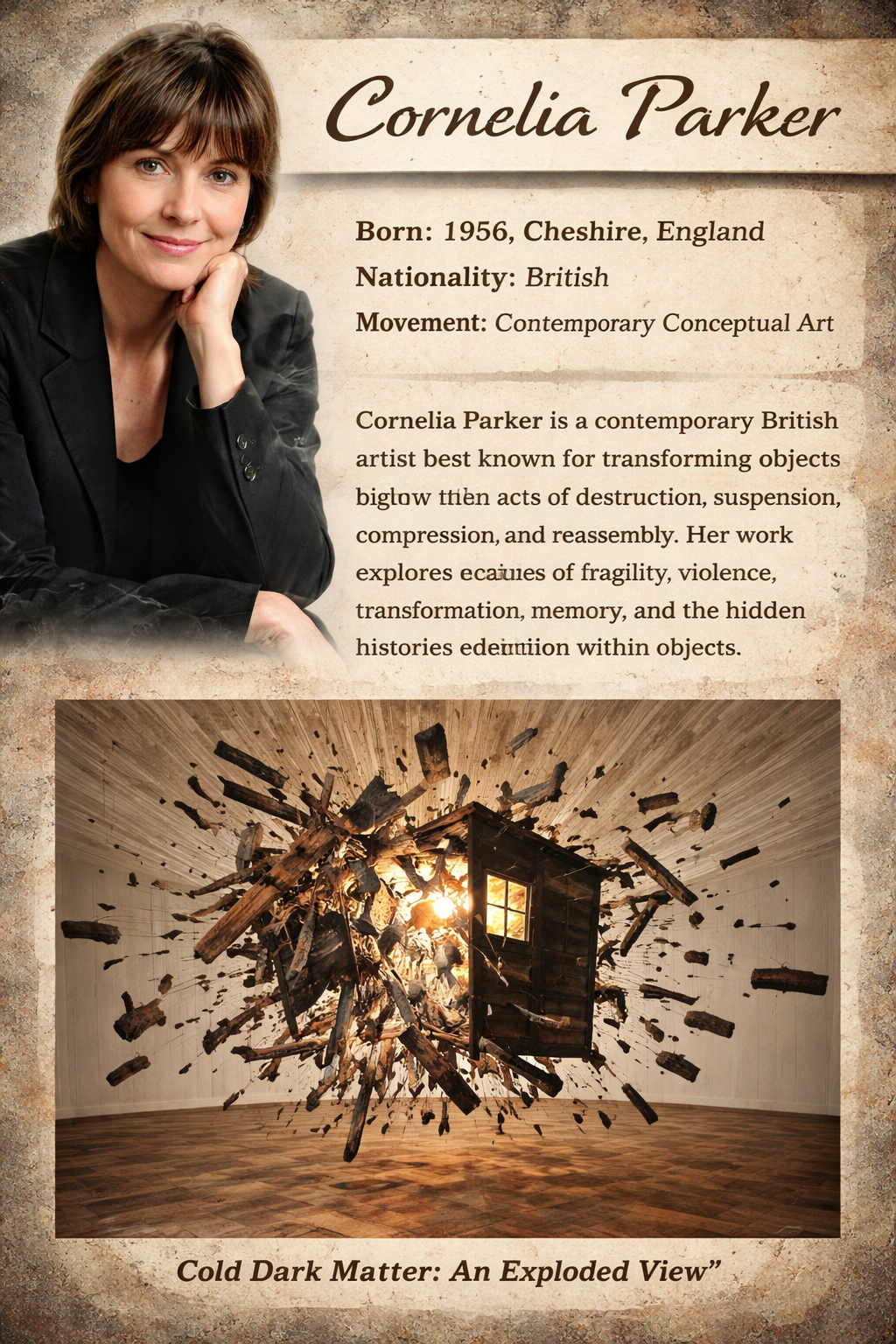
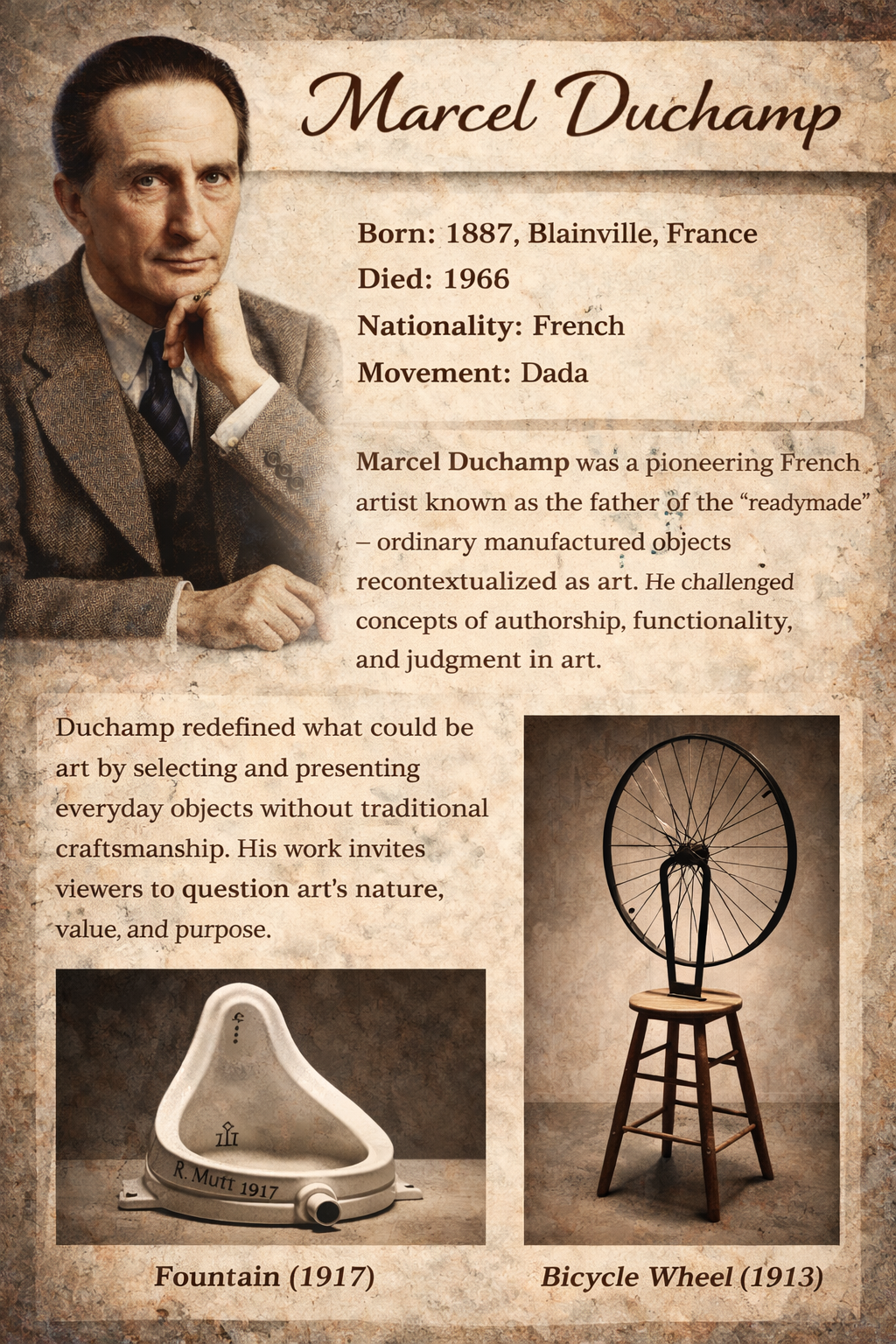
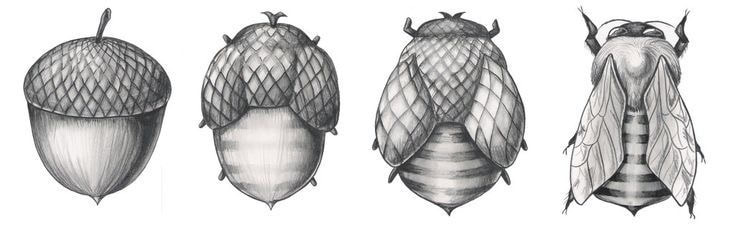
This assignment pushes students beyond decorative modification and into conceptual transformation. Inspired by artists such as Marcel Duchamp, Claes Oldenburg, Cornelia Parker, and contemporary installation artists, students will explore how scale, material manipulation, distortion, fragmentation, repetition, or recontextualization can shift perception and meaning.
Students must think critically about how viewers assign value and identity to objects. When does a chair stop being a chair? How does altering function change symbolism? Can destruction, exaggeration, or reconstruction reveal new meaning?
The goal is not simply to redesign an object, but to create a work that communicates a clear conceptual intention—social, political, psychological, or personal.
The final piece should reflect AP-level craftsmanship, conceptual depth, and risk-taking in both material and idea development.
AP Studio Focus
This assignment supports:
* Sustained Investigation: Exploring themes such as identity, consumerism, memory, environmental impact, fragility, or transformation through object-based inquiry.
* Material Practice: Demonstrating intentional manipulation of materials, construction techniques, and structural problem-solving.
* Visual Evidence of Inquiry: Showing conceptual evolution through planning, experimentation, and revision.
Objective
Students will:
* Select an everyday object with symbolic or conceptual potential.
* Develop a transformation plan that shifts the object’s meaning while keeping it recognizable.
* Apply material manipulation techniques (deconstruction, reconstruction, layering, distortion, scale shift, etc.).
* Demonstrate advanced craftsmanship and structural stability.
* Produce a resolved artwork that communicates a clear conceptual message.
Possible Approaches
Students may explore:
* Scale Shift: Enlarge or miniaturize an object to alter significance.
* Material Contrast: Recreate a hard object in soft materials (fabric, wax, paper).
* Function Removal: Disable or restrict the object’s original use.
* Fragmentation: Break apart and reconstruct to express tension or trauma.
* Accumulation/Repetition: Multiply the object to comment on excess or identity.
Essential Question
How can transforming a familiar object alter its meaning and challenge the way we perceive function, identity, or value?
Learning Objectives / Student Targets
By the end of this project, students will be able to:
Concept Development & Inquiry
* Generate a concept-driven transformation plan that shifts the meaning or function of an everyday object.
* Develop a clear artistic intention that goes beyond decorative alteration.
* Explore symbolic, emotional, social, or conceptual layers embedded in familiar objects.
* Distinguish between modification for aesthetics and transformation for meaning.
Material & Technical Skill
* Demonstrate advanced craftsmanship in cutting, assembling, attaching, altering, or reconstructing materials.
* Apply appropriate construction methods to ensure structural stability and durability.
* Manipulate materials intentionally to enhance conceptual impact (distortion, scale shift, texture contrast, fragmentation).
* Refine surfaces and details to achieve professional-level presentation.
Transformation & Innovation
* Maintain recognizability of the original object while clearly shifting its context or meaning.
* Experiment with unexpected materials, combinations, or structural approaches.
* Take creative risks in both concept and execution.
* Use contrast (hard/soft, functional/nonfunctional, intact/broken, large/small) to reinforce transformation.
Composition & Spatial Awareness
* Consider how the object occupies space and interacts with its environment.
* Use scale, balance, proportion, and placement to guide viewer interpretation.
* Create visual hierarchy within a three-dimensional or mixed-media format.
Creative & Critical Thinking
* Analyze how viewers assign meaning and function to objects.
* Problem-solve structural and conceptual challenges during construction.
* Make intentional revisions based on critique and self-evaluation.
Reflection & Artistic Growth
* Articulate how the transformed object communicates a new meaning.
* Reflect on how material choices strengthened or limited conceptual clarity.
* Demonstrate growth in conceptual thinking, risk-taking, and craftsmanship.
Ohio Fine Arts Standards (Visual Arts)
Generate & Conceptualize Artistic Ideas
* Use multiple approaches to begin creative endeavors (e.g., object observation, thumbnail sketches, exploratory material studies).
* Shape an artistic investigation of an aspect of contemporary life (e.g., consumer culture, function vs. identity, memory) using a contemporary practice of art or design.
Organize & Develop Artistic Work
* Select and experiment with materials, tools, and techniques to shape artistic ideas into works of art (object deconstruction, reconstruction, material contrast).
* Demonstrate quality craftsmanship through careful selection, handling, and refinement of materials and construction methods.
Refine & Complete Artistic Work
* Evaluate and refine works of art through persistence, practice, and reflection.
* Individually or collaboratively apply tools, media, and techniques with precision to enhance artistic intent (e.g., material transformation, structural integrity).
Perceive & Analyze Artistic Work
* Hypothesize how art reflects observation, investigation, or cultural meaning (connect object transformation to meaning).
* Use art vocabulary to express preferences with evidence and supporting reasons (through critique or reflection).
Interpret Intent & Meaning
* Interpret art by distinguishing between relevant and non-relevant contextual information.
* Analyze methods (e.g., material manipulation, scale, contrast, texture) artists use to convey mood, tone, or concept.
Apply Criteria
* Establish criteria to evaluate artistic choices, craftsmanship, and design quality (connect rubric criteria to reflection/critique).
Synthesize & Relate Knowledge & Personal Experience
* Create works that reflect personal connections to experiences, knowledge, or observation (student object choice, memory, societal issue).
* Apply visual arts skills and habits of mind to deepen understanding of other disciplines or life contexts (e.g., how transformation reflects social critique, function vs. form).
Relate Artistic Ideas & Works with Societal, Cultural, and Historical Context
* Relate artistic ideas and works within content area/other disciplines (e.g., psychology of object identity, historical use of ready-mades, consumerism).
* Analyze how visual arts impact cultural and societal understanding.
Grading Rubric
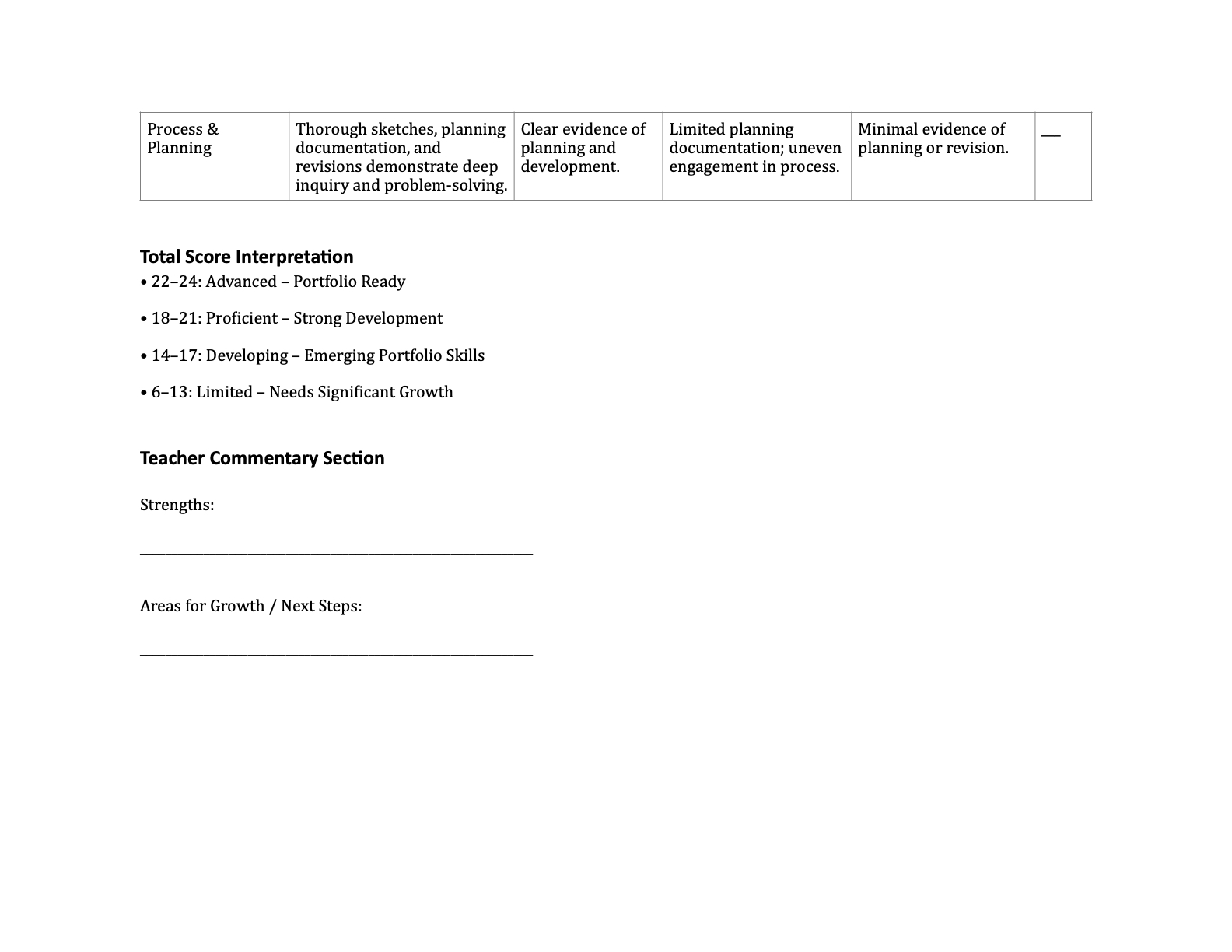
Rubrics have become popular with teachers as a means of communicating expectations for an assignment, providing focused feedback on works in progress, and grading final products. A rubric is a document that articulates the expectations for an assignment by listing the criteria, or what counts, and describing levels of quality from excellent to poor.

Student Reflection
A student reflection is a brief, thoughtful explanation of how and why a student created their artwork, including the choices they made, challenges they faced, and what they learned during the process. In art, reflection is important because it helps students develop critical thinking, recognize growth, strengthen their creative decision-making, and take ownership of their artistic development.

Element of Art & Principle of Design

Object Transformation Artists
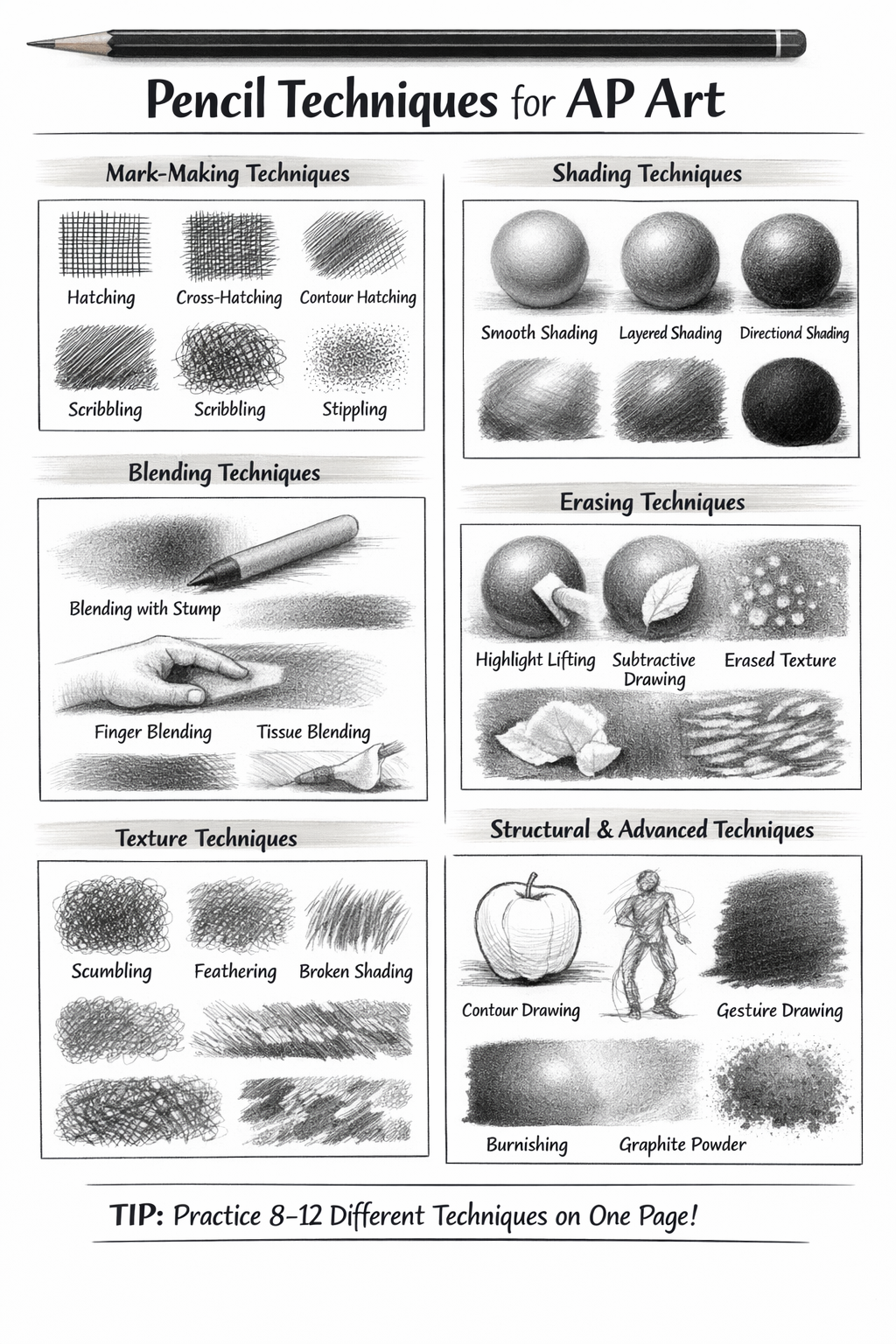
Pencil Techniques
Basic Shading Techniques
1. Hatching – Parallel lines placed close together to create value.
2. Cross-Hatching – Layers of intersecting lines to deepen value.
3. Contour Hatching – Hatching lines that follow the form of the object.
4. Scribbling – Controlled scribbles used to build tone and texture.
5. Stippling – Creating value using many small dots.
Shading Techniques
6. Smooth Shading (Gradation) – Evenly blending values from light to dark.
7. Layered Shading – Building value gradually with multiple light layers.
8. Directional Shading – Shading strokes that follow a consistent direction.
9. Mass Shading – Filling an area with solid tone before refining values.
Blending Techniques
10. Blending with Tortillon/Stump – Using a blending tool for smooth gradients.
11. Finger Blending – Smudging graphite with fingers for soft transitions.
12. Tissue/Cloth Blending – Softening shading using tissue or cloth.
Erasing Techniques (Drawing with the Eraser)
13. Highlight Lifting – Using a kneaded eraser to pull out highlights.
14. Subtractive Drawing – Shading a whole area then erasing to create forms.
15. Erased Texture – Lifting graphite to create hair, clouds, light patterns.
Texture Techniques
16. Scumbling – Small circular strokes to build texture.
17. Feathering – Light flicking strokes for hair, fur, or grass.
18. Broken Line Shading – Irregular lines to create organic textures.
Structural Drawing Techniques
19. Contour Drawing – Drawing the outline and interior edges of forms.
20. Blind Contour Drawing – Drawing without looking at the paper.
21. Continuous Line Drawing – One unbroken line drawing the entire subject.
22. Gesture Drawing – Quick loose drawings capturing movement.
Advanced Graphite Techniques
23. Burnishing – Heavy pressure to create a polished, smooth surface.
24. Graphite Powder Shading – Applying powdered graphite for soft tones.
25. Pressure Variation – Changing pencil pressure to control value.
Examples

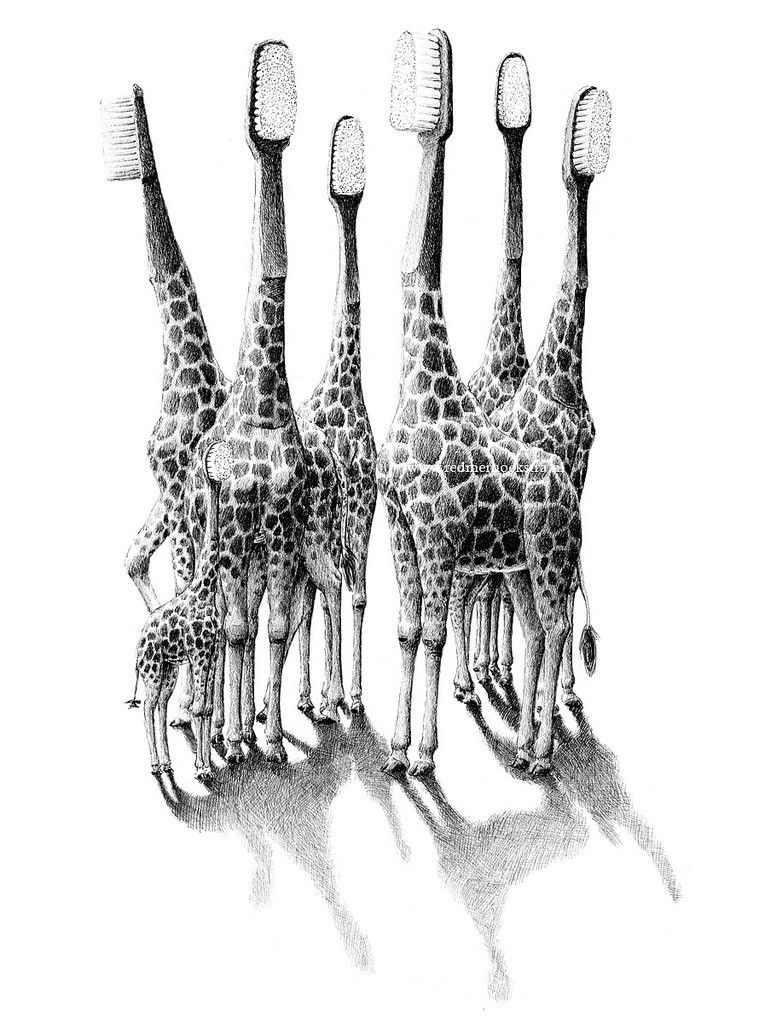


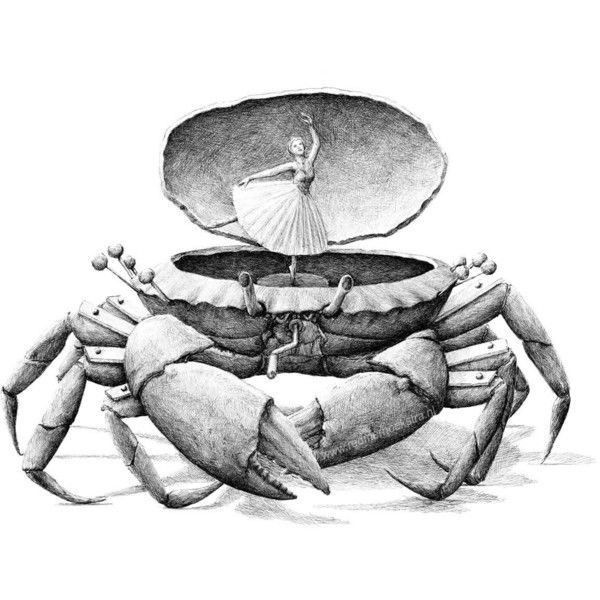


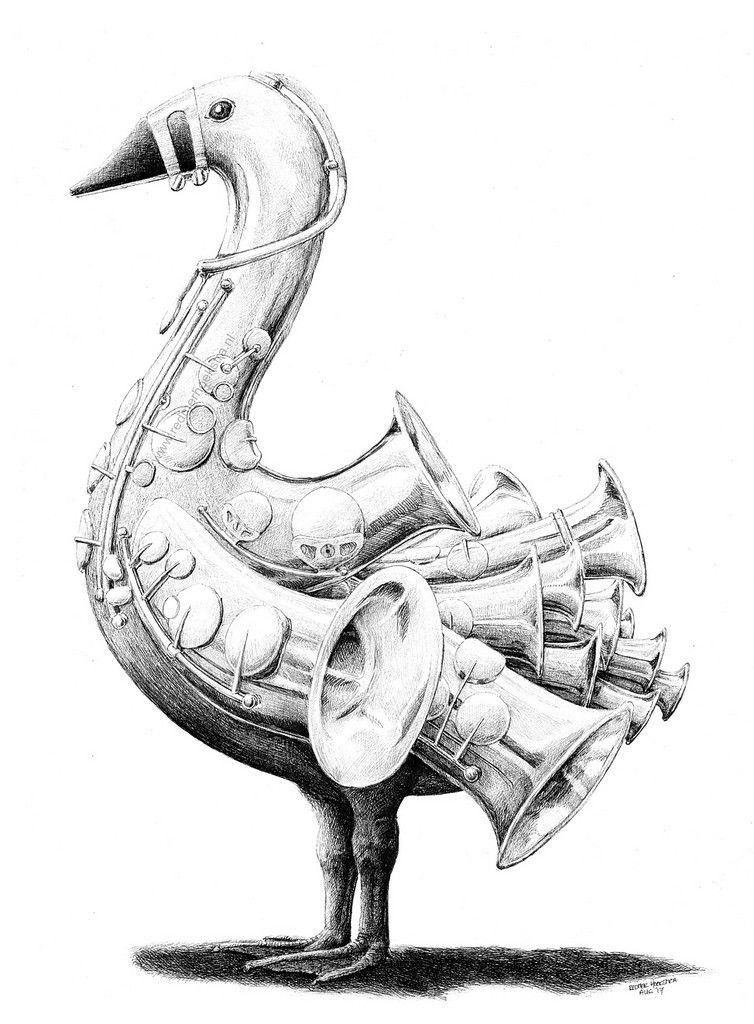
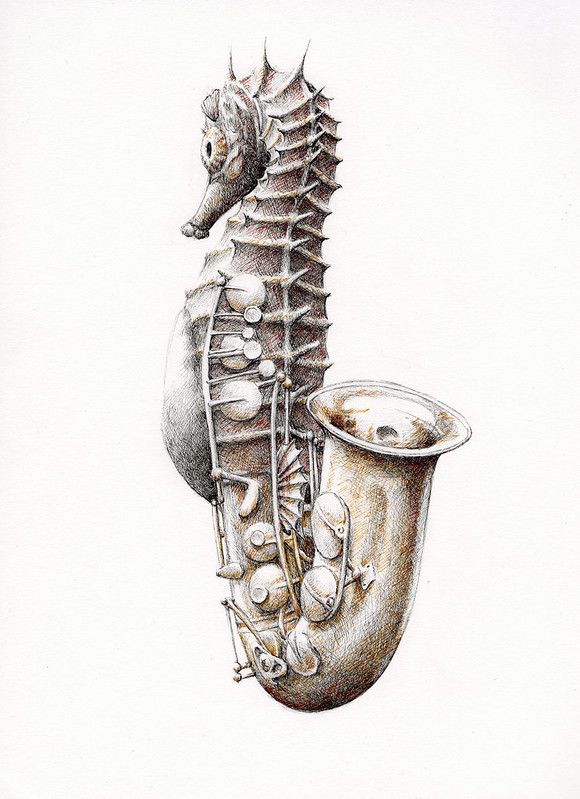


“Creativity takes courage.”

Cloverleaf High School
Follow Us